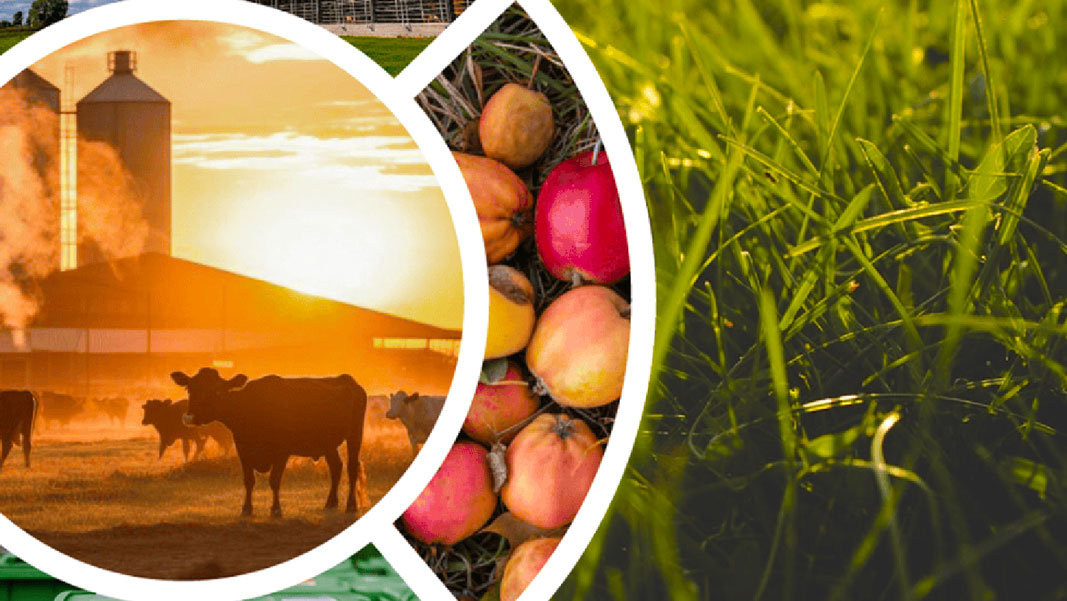
Top: Image courtesy ReFED
Methane from decomposing food waste in landfills is one of the most potent climate pollutants, and composting remains one of the most effective ways to reduce those emissions today. Composters are uniquely positioned to expand food waste diversion, and a major funding opportunity from ReFED, a national nonprofit focused on combating food waste, is designed to help. The ReFED Catalytic Grant Fund is now accepting applications for its Minimizing Methane Through Food Waste Solutions open call, which focuses on two high-impact areas: advancing food recycling and diverting food waste from landfill, and reducing methane related to loss in beef and dairy supply chains. For composters, the opportunity lies in the food recycling component, including enhancing the sorting, decontamination, processing, and accessibility of food waste diversion systems.
The application process begins with a Letter of Intent, due by January 21, 2026 by 11:59 pm ET. Selected applicants will then be invited to submit a full proposal, with target notification for invitations scheduled for February 25, 2026. Independent review and selection periods will follow in March and April, with grantees expected to be notified by May 15, 2026. In preparing a strong Letter of Intent, gather data or metrics on current diversion volumes, contamination challenges, demand for expanded services, and potential pathways to scale their solutions. Demonstrating measurable impacts and clear implementation strategies increases competitiveness under ReFED’s selection criteria.
The Catalytic Grant Fund generally aims to deliver average awards of approximately $100,000 to $250,000. These awards are intended to be catalytic and help projects attract broader investment while accelerating impact. Beyond financial support, grantees often receive networking, strategic guidance, and visibility through ReFED’s ecosystem. For composters, such funding can support facility upgrades, contamination management processes, pilot initiatives that expand food waste acceptance, equipment upgrades, or programs that improve access to composting services across communities.
Composters and other solution providers can apply if they meet the following core criteria in their Letter of Intent:
- Impact potential: Proposals must clearly demonstrate measurable evidence, logic, or data showing how the project advances food recycling (such as increasing acceptance of food waste, improving sorting, or expanding accessibility) or reduces methane in related systems.
- Demand: Applicants should show proof that target users, partners, or systems value and will adopt the solution or that research can unlock that demand.
- Scalability and replicability: The proposal must describe a realistic pathway for the solution to grow or be replicated to maximize impact.
- Catalytic potential: ReFED funding should be critical to unlocking additional investment or impact that would otherwise be difficult to achieve without this catalytic support.
- Strong team: Applicants need a capable team with expertise and resources to successfully execute the project.
Projects that do not directly address methane reduction through food waste solutions — such as consumer education campaigns, policy advocacy, first time full-scale facility construction, or initiatives unrelated to food loss or waste outcomes — are generally not eligible. The Grant Fund also emphasizes that early-stage or untested solutions are eligible if they demonstrate strong impact potential, a clear pathway to scale, and the necessary team capacity. This is an important note for innovative composting technologies or pilot programs that may not yet have large datasets but show promise to drive methane reduction.