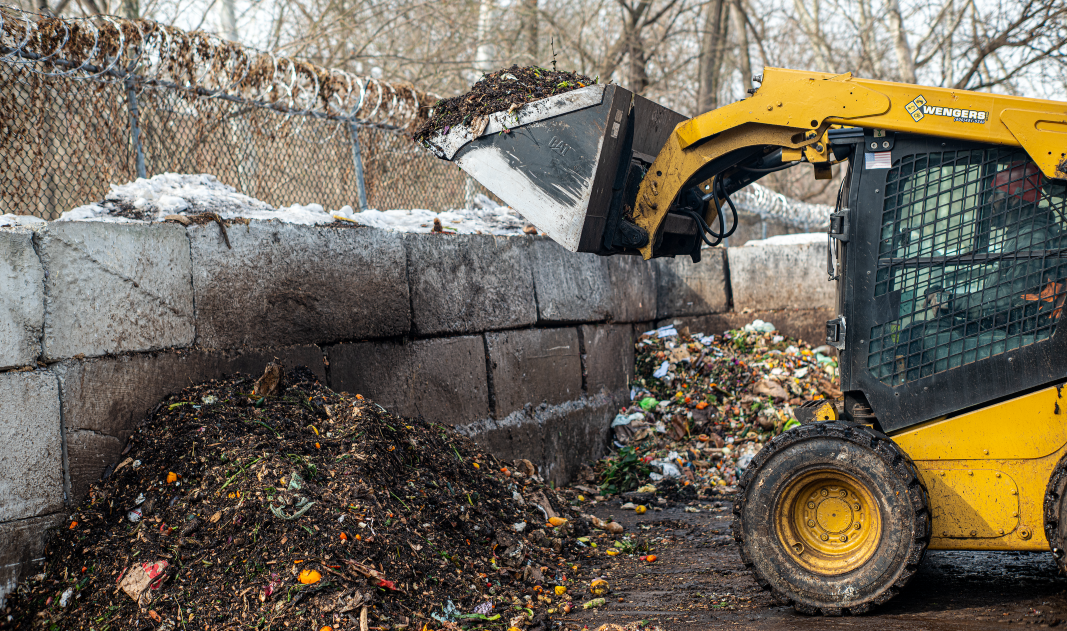
Top Photo: Taken at Bennett Compost. All photos in this post are credited to Julia Murphy.
Paula Luu
In compost manufacturing, conversations about expansion often focus on new sites, aeration systems, or large-scale capital investments. Yet for many operators, the limiting factor is far more fundamental. It is the operating surface.
Through the Closed Loop Center’s Composting Consortium grant program, led in partnership with BPI and with US Composting Council technical guidance, two compost manufacturers, Veteran Compost DC and Bennett Compost, demonstrate how targeted, low-cost infrastructure upgrades can meaningfully increase throughput. By installing hardened concrete or milled asphalt pads at their facilities, both compost manufacturers strengthened day-to-day operations and positioned themselves to accept more material, serve more customers, and in some cases diversify the feedstocks they can process.
The thesis is simple but important for composters of their size. Low-cost infrastructure can make a heap of difference.
Veteran Compost: Unlocking Capacity at Alexandria Facility
Founded in 2013, Veteran Compost DC is a veteran-owned small business and an affiliate of Veteran Compost, which has facilities in Aberdeen, Maryland, and the DC metropolitan area. Located in Alexandria, Virginia, this second and smaller operation serves more than 1,500 residential households and 100 commercial customers and is permitted to process approximately 1.3 million pounds of food waste annually.
The Alexandria facility’s growth was constrained not by demand, but by site infrastructure. Operating on a quarter acre, the absence of a hardened operating surface limited material handling efficiency, made it vulnerable to weather conditions, and capped practical processing capacity. The grant funds enabled site improvements, including site grading, composting pad upgrades, and additional concrete blocks to expand composting bays. With just $5,200 in targeted infrastructure upgrades, the facility increased annual processing capacity by 700,000 pounds, reaching 2 million pounds per year. That represents a capacity increase of 135 pounds per dollar spent on the project. From a granting perspective, this type of impact was exactly what the grant program administrators were seeking.
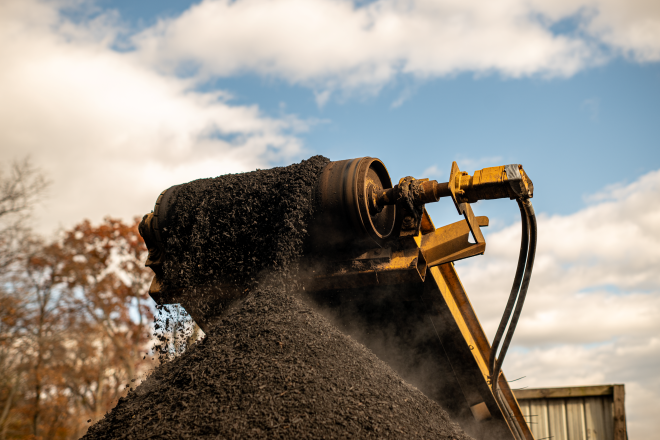
Photo Caption: Grant funding allows Veteran DC to increase their residential customer base by 50% and commercial accounts by 30% without sacrificing on quality of finished product.
“This grant program shows how fundamental, strategic infrastructure investments can unlock outsized, long‑lasting gains,” explains Caroline Barry, Senior Program Manager at the Closed Loop Center for the Circular Economy, which manages the Composting Consortium. “By using grant dollars for low-cost, critical changes, both Bennett and Veteran facilities made permanent upgrades that expanded their ability to process more food waste and certified compostable packaging. This is exactly the kind of high-impact, low‑cost return grant funders are searching for – and the capacity expansion the composting industry needs more of.”
Hardening and expanding the operating surface allows equipment to move more efficiently, reduces weather-related slowdowns, and improves feedstock blending. In practical terms, this means faster unloading, better pile management, and more consistent throughput across seasons.
“That investment may look simple on paper, but it fundamentally changed how efficiently we can move material through the site,” says Justen Garrity, Founder of Veteran Compost. “We’ve increased our annual processing capacity by 700,000 pounds and unlocked new customer opportunities. The infrastructure update supports revenue growth within our existing permit, and it strengthens our ability to serve both residential customers and commercial partners in the region.”
Bennett Compost: Building the Foundation for Growth and Unlocking New Feedstocks
Bennett Compost operates the largest residential curbside composting program in Philadelphia, collecting food waste from nearly 9,000 households and over 180 commercial customers. Across its two permitted facilities, the company has historically processed approximately 750 tons per year.
At its Lawncrest Composting Facility in Philadelphia, however, infrastructure limitations constrained growth. The site’s curing surface and processing layout limited operational flexibility and restricted the facility’s ability to scale throughput or confidently integrate additional material streams.
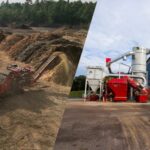
Using $15,500 in grant funding, Bennett implemented targeted infrastructure upgrades designed to strengthen the site’s processing foundation. The company built and installed a new concrete curing pad to expand the amount of material that can be composted onsite. Electrical upgrades were also completed to convert a former curing bay into aerated static piles, increasing active processing efficiency and improving oxygen management within compost piles. Together, these improvements expanded both curing and active composting capacity without requiring additional land.

Photo Caption: Tim Bennett, co-owner of Bennett Compost, stands in front of the upgraded curing pad at the company’s Lawncrest facility.
The impact has been substantial. Bennett reports that the facility has nearly doubled its capacity to handle material and is now processing significantly larger volumes on a similar footprint. Since the upgrades, the amount of food waste composted has increased by 81%, while total organic material processed has increased by 75%.
That level of growth underscores the central thesis of this work. Low-cost infrastructure upgrades can unlock major capacity gains.
The hardened curing pad improves loader mobility, reduces soil contamination risk, and enables more consistent pile management regardless of weather conditions. Converting an existing bay into aerated static piles allows material to move through the active composting phase more efficiently. These are pragmatic improvements, but they directly influence throughput.
As a mission-driven, customer-centered composter, Bennett has long wanted to evaluate how certified compostables break down within its own operations. The grant made that evaluation of liner bags and compostable serviceware possible this fall, and early observations showed the materials breaking down effectively within their system.
“We knew that if we wanted to grow and responsibly accept compostable packaging, we needed to strengthen our core infrastructure first,” says Tim Bennett, Founder of Bennett Compost. “The new curing pad and aerated static pile upgrades have nearly doubled our capacity and allowed us to process significantly more food waste. At the same time, we have been able to test and begin adding certified compostable packaging to our accepted materials list with confidence.”
The addition of compostable plastic and fiber packaging represents both an operational and market opportunity for Bennett. It diversifies feedstocks, supports commercial customer recruitment and onboarding, helps bring in more food scraps to the facility, and aligns the facility with broader circular economy initiatives. But none of that is possible without sufficient processing capacity and stable site infrastructure.
By reinforcing the physical backbone of the Lawncrest facility, Bennett Compost strengthened its business model. Increased throughput supports higher revenue potential within existing permits. Expanded curing and active processing space reduces bottlenecks. Diversified feedstocks position the company for future growth.
BPI has been investing in strengthening core composting infrastructure through this grant partnership with the Closed Loop Center’s Composting Consortium and through its own microgrant program, launched in 2024. “When operators have the capacity and operational stability they need, they can confidently accept more food scraps, integrate certified compostable packaging, and bring a high-quality finished compost to market,” says Leslie Rodgers, Director of Marketing and Communications for BPI. “These infrastructure upgrades translate directly into greater diversion, stronger community service, and the scaling of a circular organics system.”

Photo Caption: Bennett Compost began testing liner bags and compostable serviceware with support from this grant – and will begin to accept these materials with their existing customer base.
A Replicable Model for Scaling Composting Infrastructure
For a facility already serving a large residential and commercial base, this grant-funded project also strengthens the region’s ability to manage food waste and food contact compostable packaging in a permitted facility that already understands the material stream.
These types of upgrades do not usually grab headlines but are so critical to scaling organics recycling. They involve grading, blocks, and hardened surfaces. For operators, these are the leverage points that determine whether growth is possible.
The projects at Veteran Compost and Bennett Compost underscore a broader insight for the industry. Scaling composting capacity does not always require major capital expansion. In many cases, the constraint lies in site infrastructure that can be strengthened with modest investment.
The Composting Consortium and BPI grant program is structured around this principle. By funding upgrades such as concrete and milled asphalt receiving pads, composting pad expansions, and structural improvements, the program strengthens the physical backbone of the composting system.
Low cost upgrades can:
- Increase annual throughput
- Unlock new residential and commercial customers
- Increase revenue potential within existing permits
- Improve compliance and operational consistency
- Enable the acceptance of diversified feedstocks, including food-contact, certified compostable packaging
Each additional ton of food waste processed represents a reduction in landfill methane emissions and nutrients returned to soil. But just as importantly, each additional ton reflects a stronger business model for compost manufacturers. Concrete and grading are not glamorous. Yet in both Alexandria and Philadelphia, they have proven catalytic.
This article was produced as sponsored content in partnership with Closed Loop Center’s Composting Consortium and tailored for BioCycle’s audience.