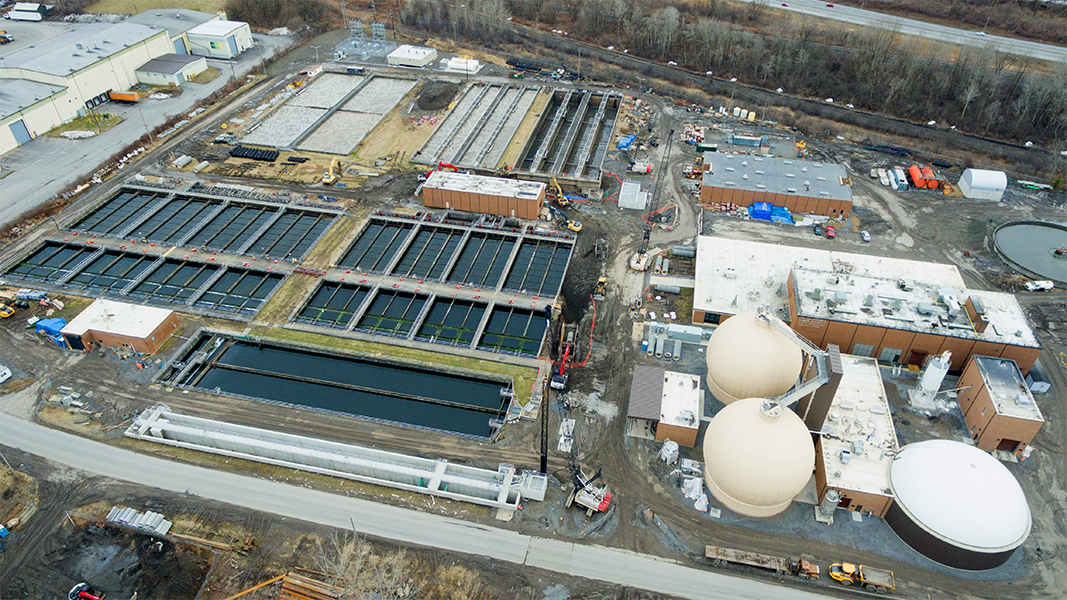
Top: Anaerobic digesters at wastewater treatment plants fall under New York State’s GHG reporting requirements. Photo courtesy Oneida County Water Pollution Control Plant (WPCP)
The New York State Department of Environmental Conservation (NYS DEC) finalized rules in December that require large greenhouse gas (GHG) emitters that generate 10,000 or more metric tons of carbon dioxide equivalent (CO2e) annually to report their emissions each year. The rule includes owners of landfills, waste-to-energy plants, anaerobic digestion facilities, and waste haulers and transporters that handle and send waste out of state. The reporting is for data collection purposes only, notes NYS DEC in a fact sheet on the mandatory program.
Owners and operators of anaerobic digestion (AD) and liquid waste storage (type of waste processing often located at wastewater treatment facilities or concentrated animal feeding operations) are required to report if wastes imported to the facility or generated at the facility are in an amount that would generate 10,000 or more MT of CO2e per year. The fact sheet states that “smaller facilities may be eligible for abbreviated reporting.” Annual reports for each AD, including any liquid or slurry waste storage must include: 1) Operational information including but not limited to location, year of construction, operational volume, and any methods used to dewater digestate after anaerobic treatment; 2) Activity data, including but not limited to the total mass of nitrogen in waste, information on the type of waste processed, and total mass of biochemical oxygen; and 3) Quantity of biogas combusted or captured.