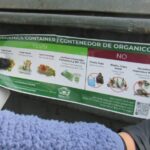

Top: Photo courtesy of Environmental Law Institute (ELI)
The Natural Resources Defense Council (NRDC) and the Environmental Law Institute (ELI) released a new set of model resolutions designed to help municipalities advance food waste reduction with fewer legal and administrative barriers. The resolutions complement six existing ELI/NRDC model municipal policies and are intended to be adopted, in whole or in part, by city councils and other municipal legislative bodies.
Resolutions are typically used to express an official, nonbinding position or policy direction. According to ELI, the new model resolutions can serve as an accessible first step toward more permanent action, including the enactment of ordinances, executive orders, or formal municipal policies that establish enforceable food waste reduction requirements.
Over the past five years, NRDC and ELI have developed a suite of governance tools designed to reduce the time and cost municipalities face when researching, drafting, and adopting food waste policies. These streamlined model policies can be adopted as written or tailored to local conditions, and are supported by background memoranda, commentaries, and slide decks.
Each of the six model municipal policies now includes a companion resolution that helps raise awareness, signal municipal support for specific outcomes, and authorize legislative review of potential actions. While nonbinding, ELI notes that resolutions can catalyze lasting change, as seen in Seattle, where early recycling resolutions preceded requirements for multifamily food sc collection and food scrap disposal bans.
In addition to formal governance tools, municipalities can advance food waste reduction through pilot programs, stakeholder convenings, and integration into broader sustainability and climate action plans. Together, the model policies and resolutions provide practical tools to help cities move from intention to implementation and lay the groundwork for lasting food waste reduction measures.
Model Governance Tools and Resources
Each resolution and its companion policy can be found through the appropriate hub of model governance tools:
- Model Municipal Ordinance on Advancing Community Composting (June 2025)
- Model Municipal Zoning Ordinance on Community Composting (June 2024)
- Model Ordinance Establishing a Pay-As-You-Throw Program for Residential Municipal Solid Waste (November 2023)
- Model Executive Order on Municipal Leadership on Food Waste Reduction (July 2023)
- Model Ordinance on Mandatory Reporting for Large Food Waste Generators (July 2022)
- Model Compost Procurement Policy (July 2021)