
A newly published study introduces an open-source decision support tool designed to help farmers evaluate whether anaerobic digestion (AD) makes financial and operational sense for their operations before committing to a major capital investment. The model, called Farm Energy Analysis with Anaerobic Digestion (FEAAD), was developed to estimate the technical, environmental, and economic performance of on-farm AD systems using farm-specific inputs.
While AD has become an increasingly attractive option for managing manure, food waste, and other organic residuals while producing renewable energy and reducing greenhouse gas emissions, many projects struggle during development because system performance depends heavily on feedstock availability, energy demand, equipment sizing, and local economics. The FEAAD tool is intended to bridge that gap by allowing users to model different scenarios before construction begins. Rather than relying on generalized assumptions, the platform incorporates farm characteristics, available feedstocks, energy use, and potential revenue streams to estimate project outcomes. Researchers demonstrated the model through two case studies, illustrating how the tool can identify design tradeoffs and improve project planning.
One of the strengths of the model is its flexibility. Users can compare different digester configurations, evaluate the effects of co-digesting additional organic materials, and assess how changing energy prices or policy incentives influence project economics. The tool also estimates greenhouse gas reductions and renewable energy production, helping users evaluate both financial returns and environmental performance.
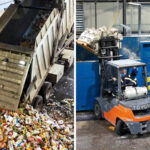
Many farm digesters increasingly rely on off-farm organic residuals, including source separated food waste, to improve biogas production and project economics. Tools that better quantify feedstock availability and expected system performance may help strengthen partnerships between agricultural operations and commercial food waste generators while reducing investment uncertainty.
The authors – Elmin Rahic, Siobhan Fathel, Jim Jordahl, and Christine Costello – describe the tool as a resource for farmers, consultants, researchers, and policymakers seeking a more standardized approach to evaluating AD opportunities. By making the model open source, they also hope to encourage broader adoption and continued refinement as additional operating data become available.
As interest in renewable natural gas, on-farm energy production, and food waste diversion continues to grow, decision support tools like FEAAD could help project developers move beyond feasibility estimates based on generalized assumptions and toward site-specific planning that better reflects real-world operating conditions.