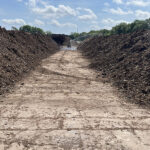

Top Photo: Limoneira Composting Site. Credit: Agromin.
Agromin, California’s largest organics recycler, composted more than 1.25 million tons of organic waste in 2025, a 250,000 ton increase over 2024. The Oxnard-based company operates 21 processing and composting facilities statewide, supplying finished compost and mulch products to agriculture, landscaping, public agencies, and residents.
The growth comes as jurisdictions continue implementing SB 1383, California’s mandatory organic waste diversion law. While food scrap collection programs are expanding, Agromin’s 2025 tonnage remains predominantly green waste.
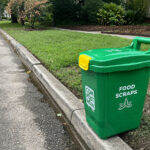
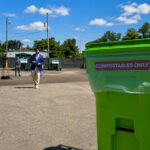
“Less than five percent of the material we compost is food scraps,” says Bill Camarillo, Agromin’s CEO. “We process food scraps mechanically to remove contamination, but that material is sent to anaerobic digestion. Only a very small portion, less than one percent, comes in commingled with green waste and is composted after manual removal of contamination.”
For compost operators, the breakdown reflects a broader statewide trend. Even under SB 1383, green waste continues to anchor compost production volumes, while mechanically depackaged food waste often flows to AD infrastructure.
On the demand side, Agromin expanded partnerships with jurisdictions seeking to meet SB 1383 procurement requirements. In 2025, 10 jurisdictions worked with the company on customized compost and mulch coupon programs. Residents in nine cities and unincorporated areas of Ventura County ordered free materials through an online portal. The program distributed 1,806 tons of compost and 2,246 tons of mulch in bulk, along with 17,450 bags of compost.
However, Camarillo notes that residential distribution is only one piece of compliance. “Typically the coupon program accounts for 5% to 10% of a city’s procurement requirement, depending on its size,” he says. “It is one part of a broader strategy that includes municipal use and direct service provider programs with farmers who take the majority of the material.”
That diversified approach is critical. SB 1383 requires jurisdictions not only to divert organics but also to procure recovered organic products. For processors, stable end markets are as important as inbound feedstock.
According to Camarillo, resident engagement through coupon programs is increasing year over year. “The demand is growing in popularity, and we expect to see a dramatic increase in participation with our current cities and new jurisdictions coming on board,” he says.
For compost operators and municipal program managers, Agromin’s 2025 results highlight two realities of California’s organics landscape. Green waste remains the dominant compost feedstock even as food scrap collection expands. And procurement compliance requires layered market development, combining visible residential programs with large volume agricultural and municipal applications to absorb material at scale.