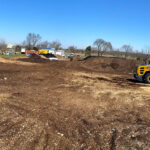

Top photo: Businesses in Cold Spring, NY are participating in a food waste reduction and recycling pilot. Photo courtesy of Center for EcoTechnology (CET)
Cold Spring, New York, is showing how a small community can build commercial food scrap diversion by combining hands-on technical assistance, local partnerships, and a manageable pilot program.
A new case study from the Center for EcoTechnology (CET) highlights the village’s work with local businesses and institutions to reduce wasted food and expand composting. The effort began with a Waste Reduction Action Day that connected 10 Cold Spring businesses and institutions with CET staff for individualized support on food waste prevention, donation, and food scrap recycling. The event helped identify businesses interested in taking the next step and created momentum for a community-wide commercial composting pilot.
That pilot is now being coordinated by the Cold Spring Chamber of Commerce in partnership with the Town of Philipstown, the Philipstown Climate Smart Task Force, and CET. Participating restaurants, schools, markets, and other organizations receive food scrap collection service from CRP Sanitation, which hauls the material to a regional composting facility. CET provides technical and logistical assistance, including on-site assessments and help integrating collection into existing kitchen operations.
CET said one of the biggest advantages in Cold Spring was having a trusted local organization lead the effort. “The presence of a known entity, in their case, the Chamber, makes it easier to build trust within community,” CET noted. “If it was solely CET’s presence at the outset, we’d not yet developed credibility.” That local leadership also helped shape the hauling arrangement. With CET’s assistance, the village developed an RFP that clearly laid out participation expectations, including a minimum of six businesses and a goal of reaching at least 10. CET said the RFP created a stronger negotiating position by showing haulers that the community had already done the planning needed to support a viable program.
The pilot has also been built with relatively modest resources. There is no paid staff dedicated to the program, and implementation has relied on volunteers, the steering committee, and CET. Initial funding came from a $6,000 Williams College Community Composting Fund grant, followed by a $25,000 award secured through Assemblyperson Dana Levenberg’s office to help continue and expand the effort. CET said the model is already beginning to spread, with Cold Spring recently mentoring another municipality in a neighboring county. Rather than having CET relay the lessons secondhand, the neighboring community was able to hear directly from Cold Spring about what worked, what it took to get started, and how the program was structured.
The program recently received New York State funding that will allow it to expand to 10 participating businesses and organizations and cover a full year of food scrap collection service. Funding can help offset the cost of carts and collection while businesses test whether composting can work within their day-to-day operations.
Cold Spring already had a residential food scrap collection program in place, giving the commercial effort a foundation to build on. Residential participation has grown enough that the village expanded drop-off hours in 2026. Food scraps collected through the municipal program are transported for composting rather than disposal.
The commercial pilot extends that infrastructure to businesses that may generate significantly larger and more consistent volumes of food scraps. Rather than launching a mandatory program or investing immediately in new processing infrastructure, Cold Spring is starting with interested generators, existing hauling capacity, and technical assistance.
That approach is central to CET’s broader work with small communities. The nonprofit emphasizes practical waste diversion models that can be scaled to local conditions, including composting, food donation, and food waste prevention.