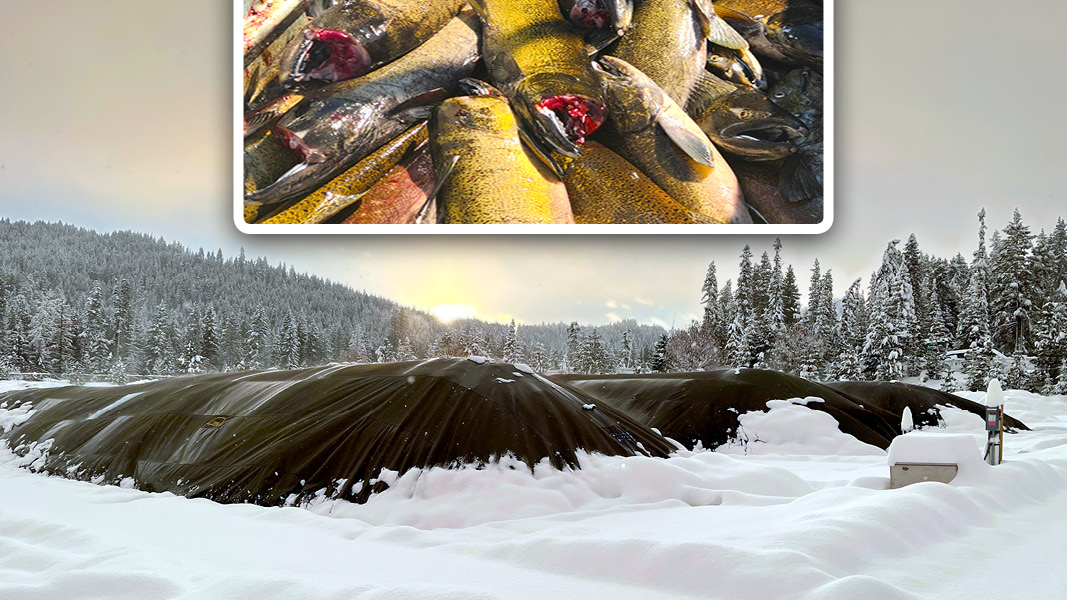
Top: Salmon carcasses — after fish eggs are removed at the hatchery — are composted at Winton MFG using the GORE® Covers system. Images courtesy Winton MFG
Leavenworth National Fish Hatchery (LNFH) in Leavenworth, Washington raises 1.2 million spring Chinook salmon each year that it releases into the Icicle Creek. Staff at LNFH spawn around 1,000 fish each year to get the number of eggs needed for the next generation. “For decades, the hatchery has followed the same practice with carcasses after spawning: burying fish remains on-site,” writes Sophia Troeh, a park ranger at the hatchery. “But thanks to a new partnership with Winton MFG in Leavenworth, we will now be composting our fish carcasses. Every ton of fish becomes about a cubic yard of compost.”
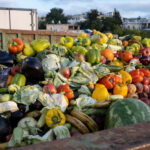
Winton MFG is an organics collection and composting company that processes yard trimmings, woody debris, food waste and certified compostable products. Robbette Schmit, Winton MFG’s general manager and a former fish biologist, saw the potential early on, helping build up its composting program to process spawned fish from the LNFH. Salmon from the hatchery are ground with other incoming food waste and yard trimmings feedstocks. Composting takes place in a positively aerated compost system with GORE® Covers.
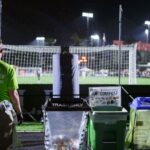
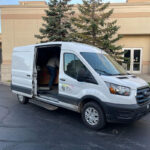
Finished compost can be purchased. Some is used on the pollinator garden at LNFH that is maintained by the Chelan County Master Gardeners. The hatchery also is hosting a community composting drop-off, where area residents can bring their food scraps for composting at Winton MFG. “A bear-safe enclosure will be located at the parking lot outside the front gate,” notes Troeh in her article. “[Residents] can access the enclosure using a keypad and tip their compostable food waste into the bin using a hands-free system. Winton then has weekly pickups scheduled that follow best management practices to keep the system clean and efficient. This new hatchery-supported composting drop-off location follows BearWise protocols, leading to less habituated bears in the area getting into residential garbage cans. This partnership with Winton MFG and local landowners is more than just practical; it’s a way of giving back. Compost created from spawning this year will nourish next year’s crops. And through it all, our hatchery and salmon remain an indirect but essential partner to the agricultural industry, helping to keep our community thriving.”