

Top Photo: Tub grinders can handle bulkier materials such as tree stumps and processed wood materials like pallets. Photos courtesy of Vermeer Corporation.
Todd Versteeg
Facility managers need to determine the best processing equipment for their fleet to effectively handle different waste streams. The two most common equipment types for sizing wood and yard waste, land clearing debris, construction and demolition (C&D) debris, and municipal solid waste (MSW) are low speed shredders and high speed grinders.
Understanding the difference between shredders and high speed grinders is important for organics recycling facilities. Knowing which materials work best with each machine results in processing organics more efficiently, enabling effective materials management.
Waste Sizing Equipment Categories
Recycling and forestry professionals use low speed shredders and high speed grinders to process a variety of waste materials. When evaluating high speed grinders, there are two machine styles: horizontal grinders and tub grinders. The categorization of low speed shredders typically depends on the number of shafts, which can range from one to four.
Several factors, such as the type, size and shape of the material to be processed, the location of the facility, and the desired end product, influence the choice between these machines. “Shredders are an excellent choice for recycling operations that encounter materials that may contain contaminants like metal objects,” explains Jeff Bradley, Recycling and Forestry product manager at Vermeer. “Tub and horizontal grinders are often used to process clean organic wood waste efficiently and reduce materials to a more consistent size, compared to most shredders.”
When To Use Low Speed Shredder
Low speed shredders are versatile machines that excel in processing material with contaminants due to their low rotor speed and high torque configuration. Shredders can handle a wide range of waste streams, including C&D waste, contaminated green waste, MSW, storm debris, and materials from land clearing operations where crews may encounter more than just organic material. Operators often use these machines for primary size reduction because they are less likely to damage components when encountering ferrous contaminants.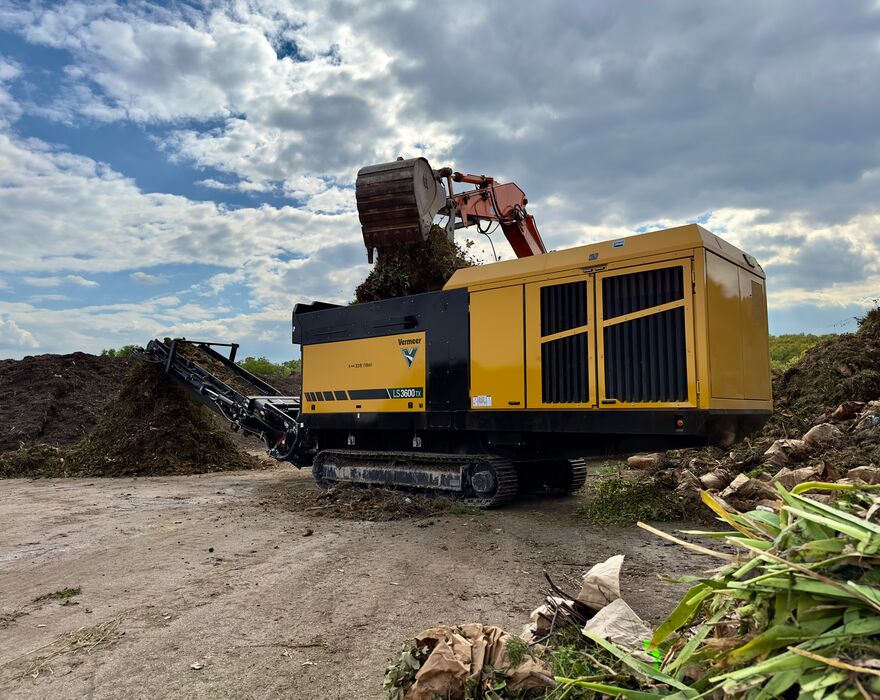
Low speed shredders excel in processing material with contaminants due to their low rotor speed and high torque configuration.
Shredders are also highly effective at processing materials such as railroad ties and heavy C&D waste. While processing material, shredders can remove ferrous metals when equipped with crossband magnets, which allow companies to process a wider range of materials and potentially create new revenue streams. Operators can utilize a horizontal grinder or tub grinder for final product sizing needs once any metal contaminants are separated from the organic material.
For smaller waste facilities or those in urban areas, shredders are a good option for primary size reduction of material. These heavy-duty machines are fuel efficient, operate quietly, help minimize dust and because of their low speed, are less likely to throw objects long distances.
Shredder Limitations
The slow rotor rotation speed is one of the qualities that make shredders more tolerant of contaminants. However, those slow speeds also mean shredders take longer to process material than high speed grinders. Slow speed shredders produce chunky, inconsistent product sizes that may require additional processing depending on the intended use of the material. But while shredders don’t have the same product sizing advantages as high speed grinders, they can serve as a first line of defense for organics recycling and composting operations.
Low speed shredders typically operate at around 30 rpm to 40 rpm, using high torque to crush and tear material. The slower speed allows more time for operators to spot and remove contaminants from incoming streams. The shredding action is also useful for crews opening bags of organics or looking to reduce waste volume before starting next steps.
When evaluating if a shredder would be the right fit for your fleet, Bradley considers maintenance accessibility. Many shredders have limited access to the engine compartment, rotor and comb. Newer models — like the Vermeer LS3600TX low speed shredder — are designed to help owners and operators service equipment safely, efficiently and with ease.
For example, he says, the LS3600TX features intentional access to key machine components, including large doors to the engine bay, multiple ladder points and an ample service platform. This design enables clear access to the rotor and comb for routine maintenance. “This shredder is equipped with a reversible mechanical transmission for efficient power transfer and a torque limiter that automatically disengages the driveline when maximum torque is experienced, helping to protect critical machine components,” explains Bradley.
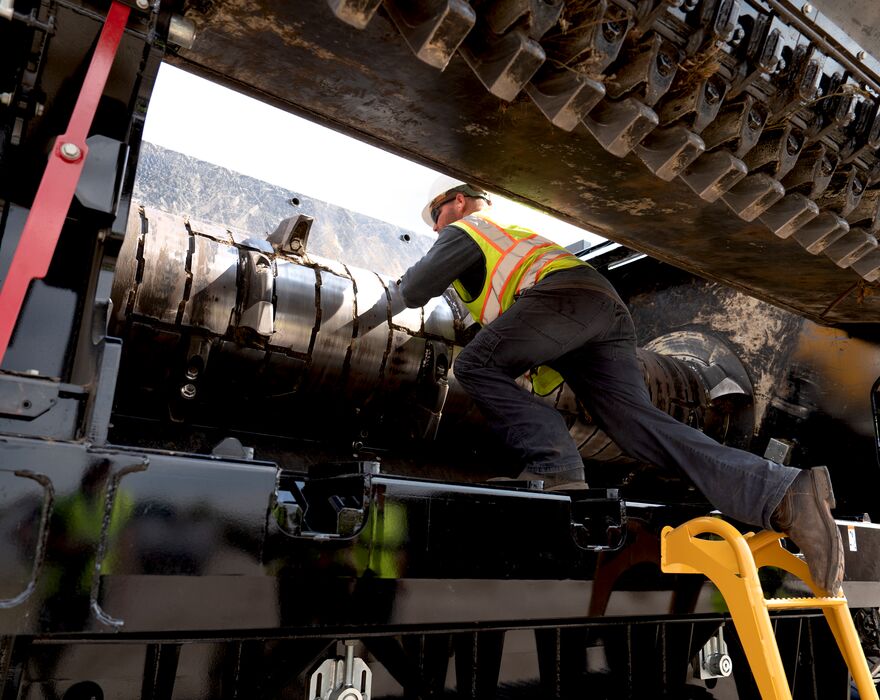
The Vermeer LS3600TX features unparalleled access to key machine components for routine maintenance, including large doors to the engine bay, multiple ladder points and a spacious service platform.
When And Where To Use A High Speed Grinder
High speed grinders – such as tub and horizontal grinders – deliver speed and productivity by design. They use fast-spinning hammer mills, from 800 rpm to 1,300 rpm, for quicker material processing compared to low speed shredders. “This makes them suitable for facilities with non-contaminated materials and when throughput is prioritized,” says Bradley. From an operational standpoint, high speed grinders deliver consistent material sizing with adjustable cutter tips and screen sizes, providing control over the final product’s size.
Grinders are excellent tools for transforming organic waste such as trees, plants and yard materials, into valuable end products like compost, mulch and biofuel. The finished size after grinding varies depending on the market application:
- Compost — Under 4 in (10.2 cm) in length and width
- Mulch — 1.5 in to 2.5 in (3.8 cm to 6.4 cm)
- Biomass/biofuel — Size varies depending on the power plant burner type and conveying system
Changing screens on a grinder allows production of varying material sizes according to a facility’s needs, providing a level of control that isn’t obtainable with shredders. This flexibility enables operators to meet the specific size requirements of different markets, which can help the versatility of waste processing operations.
Choosing Between A Horizontal Grinder And Tub Grinder
When deciding between a horizontal and tub grinder, understanding the unique advantages of each can help in making a choice tailored to a facility’s needs. “Horizontal grinders are ideal for tackling longer material,” says Ted Dirkx, Vermeer’s Recycling and Forestry sales manager. “If your waste stream includes a large volume of long-cut tree branches and limbs, a horizontal grinder can reduce the cutting time before processing the material. This efficiency can lead to considerable time savings in organic waste processing operations.”
On the other hand, tub grinders can handle bulkier materials such as tree stumps and processed wood materials like pallets, he adds. Unlike horizontal grinders that utilize conveyor chains, tub grinders rely on gravity to feed the hammer mill. This design results in fewer moving components to service.
“Tub grinders are also efficient at processing loose green materials,” explains Dirkx. “This flexibility makes them a valuable asset for facilities dealing with various waste types.”

High speed grinders deliver consistent material sizing with adjustable cutter tips and screen sizes, providing control over the final product’s size.
Grinder Limitations
Due to their high rotational speed, grinders are more prone to component damage when exposed to contaminants. They also generate more noise and require a larger thrown object zone compared to low speed shredders. Therefore, these grinders require more operating space.
Combining the Options
A scenario to consider is using high speed grinders and low speed shredders in conjunction. By utilizing a low speed shredder to pre-shred material, facilities can remove contaminants and improve the overall efficiency of their operations.
This combined approach is especially useful at waste facilities that allow public dumping, as these locations often have higher contamination rates. By employing a low speed shredder at the primary shredding stage, facilities can remove contaminants before sending the material to high speed grinders for final sizing.
“Using both machines in tandem can extend the life of parts on high speed grinders by removing contaminants that may otherwise cause excessive wear and tear,” says Bradley.
Ultimately, the goal of using sizing equipment revolves around several key objectives. These include reducing the volume of material, separating materials that can be repurposed, and creating new valuable end products. Understanding the unique capabilities and limitations of different waste-sizing equipment leads to informed decisions and optimizes organics recycling facilities management strategies. For more information on Vermeer-specific industrial recycling equipment, contact a local dealer.
This article was produced as sponsored content in partnership with Vermeer Corporation and tailored for BioCycle’s audience.