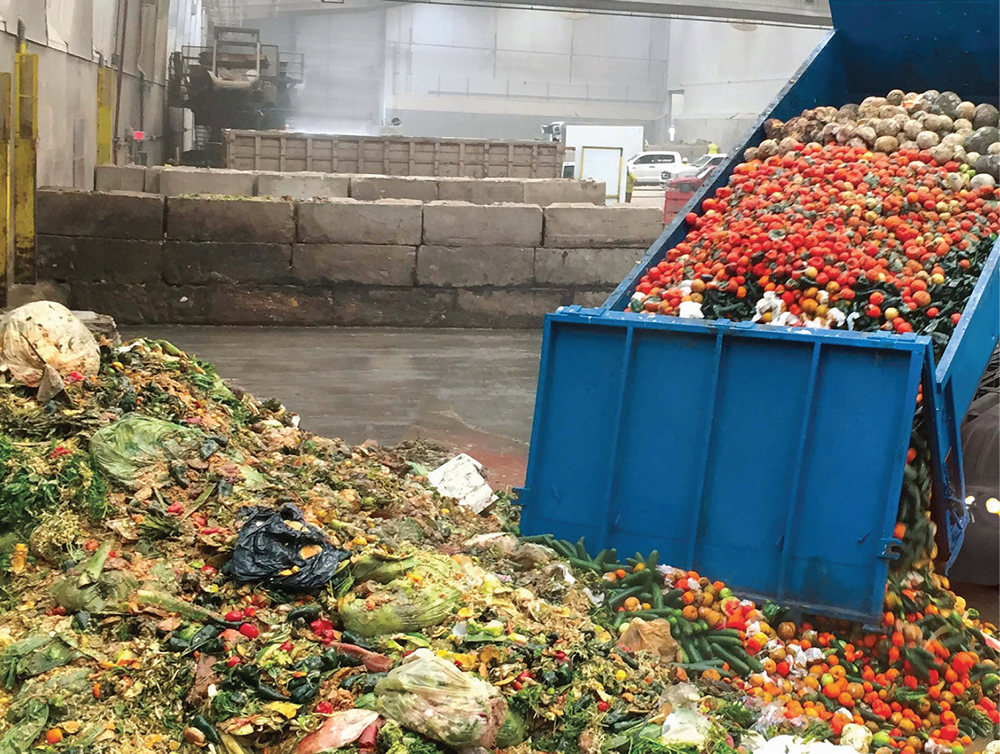
Top Photo : Photo courtesy of Los Angeles County Sanitation Districts
Small businesses working on food waste prevention and recycling may have a new federal funding opportunity this fall. The U.S. Environmental Protection Agency’s 2026 Small Business Innovation Research (SBIR) Phase I solicitation will open September 24 and close November 8, 2026. Phase I awards provide up to $100,000 for a six-month proof-of-concept project.
Of particular interest to the organics recycling sector is Topic 3A: Innovative Technologies to Prevent and Recycle Food Waste, one of three topics under EPA’s Circular Economy/Sustainable Materials category. EPA has not yet posted the full solicitation language, so prospective applicants should review the final topic description carefully once the solicitation opens to determine whether a proposed composting or food waste technology is responsive.
The program is designed for U.S. small businesses developing technologies with both environmental impact and commercial potential. For composting companies, that could potentially include new processing, contamination removal, monitoring, collection or other technologies tied directly to food waste prevention or recycling, depending on the final solicitation requirements.
Companies interested in applying should start preparing now. EPA notes that applicants need several federal registrations, including an active System for Award Management (SAM) registration, a Unique Entity Identifier, FedConnect registration and an SBA Company Registry ID. EPA warns that registration can take six to eight weeks, making early preparation particularly important. Proposals are submitted through FedConnect.
EPA evaluates Phase I proposals across three equally weighted areas: technical merit, relevance to the solicitation topic and commercial potential. The commercial review considers factors such as innovation and intellectual property, market opportunity, the company team and its commercialization approach.
Phase I is intended to establish whether a technology is technically feasible and commercially promising. Companies that successfully complete Phase I may later compete for Phase II funding of up to $400,000 over two years for further development and commercialization. EPA also offers an additional commercialization option of up to $100,000 in Phase II for companies that secure third-party investment.
For organics recycling technology developers considering an application, the immediate next step is to review Topic 3A when the full solicitation opens September 24 and begin federal registration now if those accounts are not already active.
Read more for EPA SBIR application guidance.