
Top Photo: Adobe Express
Grand Rapids, Michigan, has launched Renew Grand Rapids, a citywide food scrap drop-off pilot designed to reduce landfill disposal, cut greenhouse gas emissions and build local composting capacity.
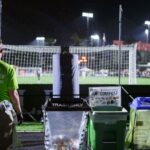
Residents across all three city wards can now enroll and use seven secure drop-off bins located at parks, a farmers market and other public sites. The bins are Bluetooth-enabled and can be opened through the city’s app; keypad access is also available for residents without smartphones.
Grand Rapids has chosen to manage the entire system itself. According to the city, Renew Grand Rapids is Michigan’s first fully municipally owned and operated compost program, with the Public Works Department overseeing collection, composting and eventual compost distribution. The city’s internal organics pilot diverted more than 5,000 pounds of food scraps in 2025 before the residential program launched this summer.
Grand Rapids estimates that organic material accounts for 35% to 40% of municipal solid waste, or roughly 13,000 tons annually. The city incorporated food scrap diversion into its Climate Action and Adaptation Plan and formed an Organics Diversion Innovation Team in 2025 to test collection strategies and build the current program.
The pilot initially targeted about 500 participants, with roughly 300 already signed up at launch. Public Works Manager Bob Swain told the local PBS station that the city ultimately hopes to grow participation to 1,000 to 2,000 residents, add more drop-off locations and potentially expand into commercial organics from restaurants and breweries.
Collected scraps are picked up weekly and taken to the city’s composting site. Finished compost is expected to return to the community through parks, community gardens and free distribution to residents. The city says it has incorporated collection into existing Public Works routes rather than creating a separate hauling system. The program is funded through a combination of state grants and the city’s refuse fund.