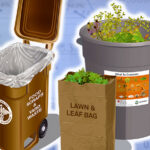

Top: Graphic courtesy Minnnesota Composting Council
The Minnesota Composting Council (MNCC) was awarded a U.S. EPA Recycling Education & Outreach (REO) grant in 2023 to create an Organics Recycling Toolkit to increase participation in municipal source separated organics programs and decrease contamination in the materials collected. The grant award was $934,947, and the three-year project — Love To Compost — kicked off in May 2024 and runs through the end of May 2027. The theme of the initiative is “Small Scraps, Big Difference.” The Toolkit components include:
- Templates for brochures, mailers, bill inserts, newsletters, social media, educational tags
- BMP (best management practice) documents for communities, haulers, and composters that cover contamination evaluations/sorts, starting a drop-off site, and communications and outreach
- Library of photos, videos of Minnesota composting facility operations
All toolkit pieces will be publicly available for free. Approximately 70% of the grant budget is being spent on the elements for advertising campaigns to promote organics programs in Minnesota. Key “Educational” headline messages, for example, are “Food scraps aren’t trash, compost them” and “Healthy soil starts with organics recycling.” Headlines within those key messages — titled “Active Behavior” are: “Don’t be a trash-hole. Recycling organics; Grow. Eat. Compost. Repeat. Get the dirt on organics recycling; and Don’t trash our land. Composting is the plan.”
Components of the toolkit are being pilot tested in several communities. Criteria for community selection is that it is new program or has expanded capacity at composting facility. MNCC uses its grant funding to promote the jurisdiction’s organics recycling program and the selected communities provide data to MNCC on sign-up/participation rates, tonnage and contamination rates, and other metrics, e.g., website visits, postcards returned, etc. Data is collected pre, post, and six months after the advertising campaigns. Three pilot programs (with one more to come) have been selected in Pope and Douglas Counties, Scott and Carver Counties, and the Western Lake Superior Sanitary District (its Resource Renew program).