Top Photo: Courtesy of Industrious Labs
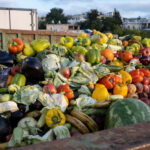
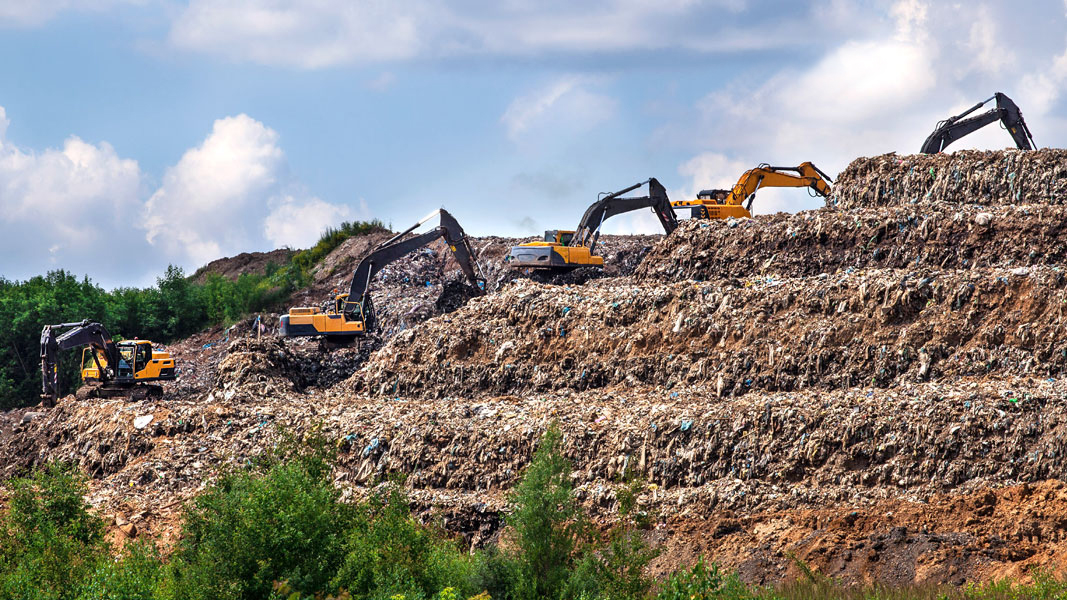
Nearly 900,000 tons of food waste are landfilled in Wisconsin each year, according to a new analysis released by the Wisconsin Department of Natural Resources (DNR). The figure, drawn from the agency’s first comprehensive assessment of food waste generation and disposal, offers one of the clearest pictures yet of how much recoverable organic material continues to flow into landfills across the state.
The findings underscore both the scale of the challenge and the size of the opportunity. Food waste represents a significant share of Wisconsin’s municipal solid waste stream, contributing to methane emissions, disposal costs, and lost economic value. Data cited by ReFED and referenced in Wisconsin Public Radio’s coverage of the report estimates that the value of wasted food in Wisconsin exceeds $2 billion annually, reflecting not only disposal costs but the embedded labor, water, energy, and land resources lost when food goes uneaten.
At the same time, the DNR analysis points to substantial potential for food donation, composting, and anaerobic digestion to reduce landfill reliance while supporting soil health, renewable energy generation, and local job creation.
Where the Food Waste Comes From
According to the DNR, the majority of Wisconsin’s food waste originates from commercial and institutional sources, including grocery stores, restaurants, food processors, schools, and healthcare facilities. Residential food waste also plays a meaningful role, though it is more diffuse and harder to capture through centralized systems.
ReFED estimates that more than half of Wisconsin’s food waste is generated by the residential and foodservice sectors combined, reinforcing the importance of both household behavior and commercial practices in shaping diversion outcomes. Yet only a small fraction of this material is currently recovered through food donation, composting, or anaerobic digestion.
The report makes clear that this gap is not driven by awareness alone. Infrastructure availability, hauling distances, contamination concerns, and limited end markets all influence whether food waste is diverted or disposed. In many parts of the state, access to nearby processing facilities remains limited, leaving landfill disposal as the default option even for recoverable material.
Economic and Climate Implications
The DNR frames food waste as a systems issue with both climate and economic consequences. When landfilled, food waste generates methane, a potent greenhouse gas, while foregoing opportunities to return nutrients to soils or produce renewable energy through anaerobic digestion.
ReFED data indicates that reducing food waste could significantly lower greenhouse gas emissions while delivering cost savings across the food system. For Wisconsin, this includes avoided landfill tipping fees, reduced long-term landfill management costs, and the economic activity associated with expanding organics recycling infrastructure.
The report aligns these findings with Wisconsin’s broader climate and waste reduction goals, emphasizing that data-driven planning is essential for directing investment toward solutions that deliver measurable environmental and economic returns.
Infrastructure and Participation Gaps
One of the clearest takeaways from the DNR assessment is the uneven distribution of recovery options across the state. Regions with access to composting facilities, food donation networks, or anaerobic digestion capacity are better positioned to divert food waste. Rural and underserved areas face steeper barriers tied to transportation costs and limited processing capacity.
The report also highlights the role of generator participation. Even where infrastructure exists, successful diversion depends on consistent source separation, contamination control, and clear guidance on acceptable materials. ReFED’s analysis reinforces this point, noting that participation and behavior change remain critical bottlenecks nationwide, not just in Wisconsin.
Local composters interviewed in related media coverage echoed these challenges, pointing to limited capacity and inconsistent participation as constraints on growth. The statewide data suggest that while individual operators are making progress, broader coordination will be required to unlock meaningful diversion at scale.
What the Data Enables Next
By quantifying food waste generation and disposal at this level of detail, the DNR report provides a foundation for next steps. Policymakers, local governments, composters, and investors can use the data to identify priority regions, assess infrastructure gaps, and design programs aligned with real-world conditions.
Importantly, the report reinforces a hierarchy of solutions. Prevention and food donation deliver the greatest environmental and social benefits, while composting and anaerobic digestion play essential roles in managing unavoidable food waste.
As Wisconsin considers how to act on these findings, the nearly 900,000-ton figure stands as both a warning and an invitation. The material is already being generated. Whether it continues to be landfilled or becomes a resource will depend on how effectively data is translated into coordinated action across the state’s food, waste, and agricultural systems.