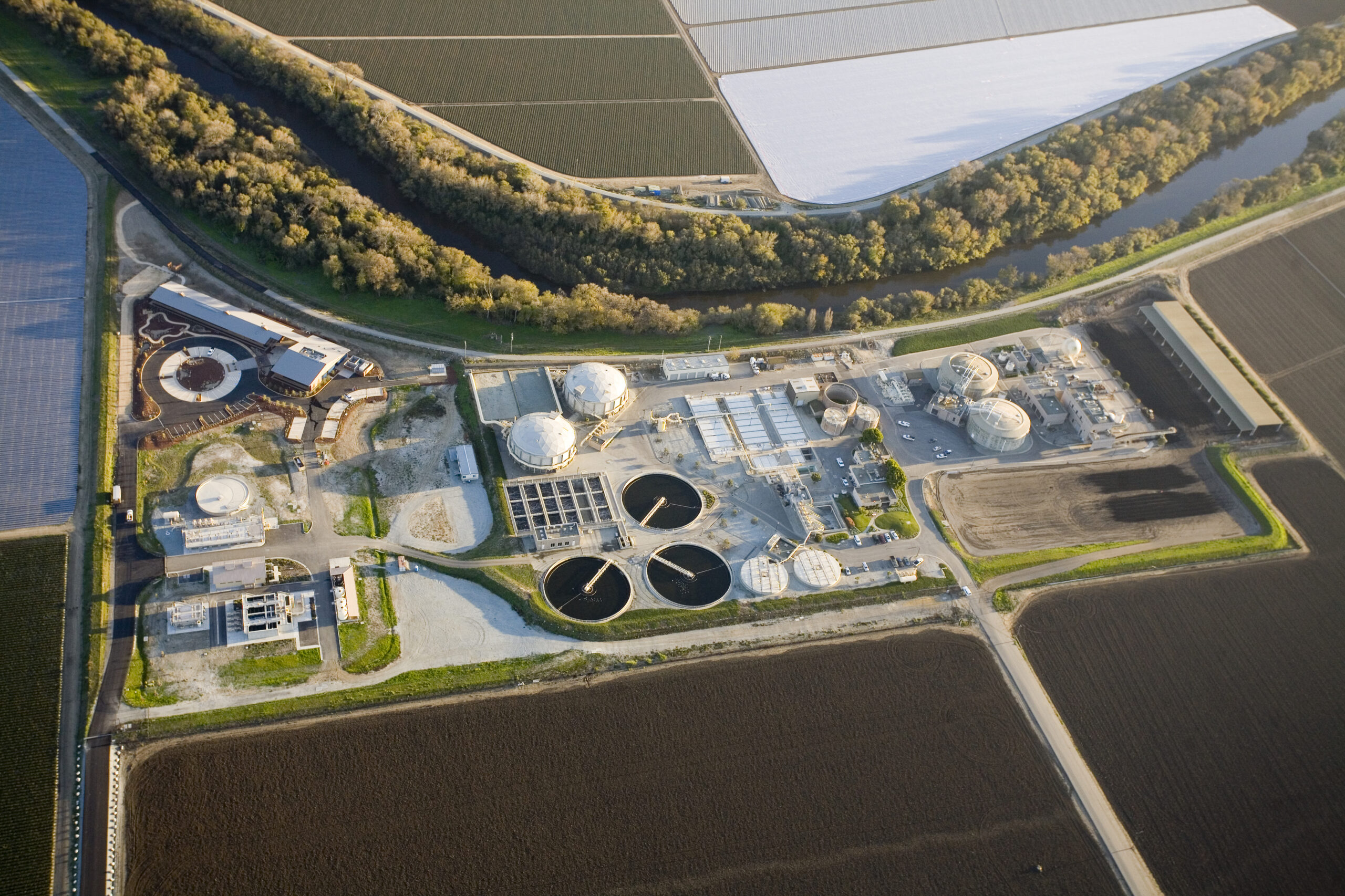
Top Photo: Watsonville wastewater facility where the pilot took place. Photo courtesy of Design4Earth.
A four-year pilot project just wrapped in Santa Cruz County, California which demonstrates that human excreta can be composted to EPA Class A Biosolids standards using low-cost, low-tech infrastructure — and that there’s a larger latent feedstock stream hiding in plain sight across rural California.
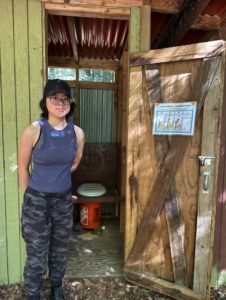
Earth4Design toilet design.
What Was Tested
Design4Earth (formerly GiveLove) partnered with Santa Cruz County to run a container-based sanitation (CBS) pilot from September 2024 through November 2025. The system is intentionally simple. Participants use a “Loveable Loo” toilet fitted with BioBag™ biodegradable bag liners inside five-gallon containers, with sawdust added as a bulking agent. Full bags are sealed and placed into 25-gallon totes for transport to a composting site at the Watsonville wastewater treatment facility, eliminating the need for container washing, urine diversion equipment, or any specialized handling infrastructure. The solid, dry waste matrix is a meaningful operational advantage over liquid waste streams — more stable, easier to store, and more manageable during transport.
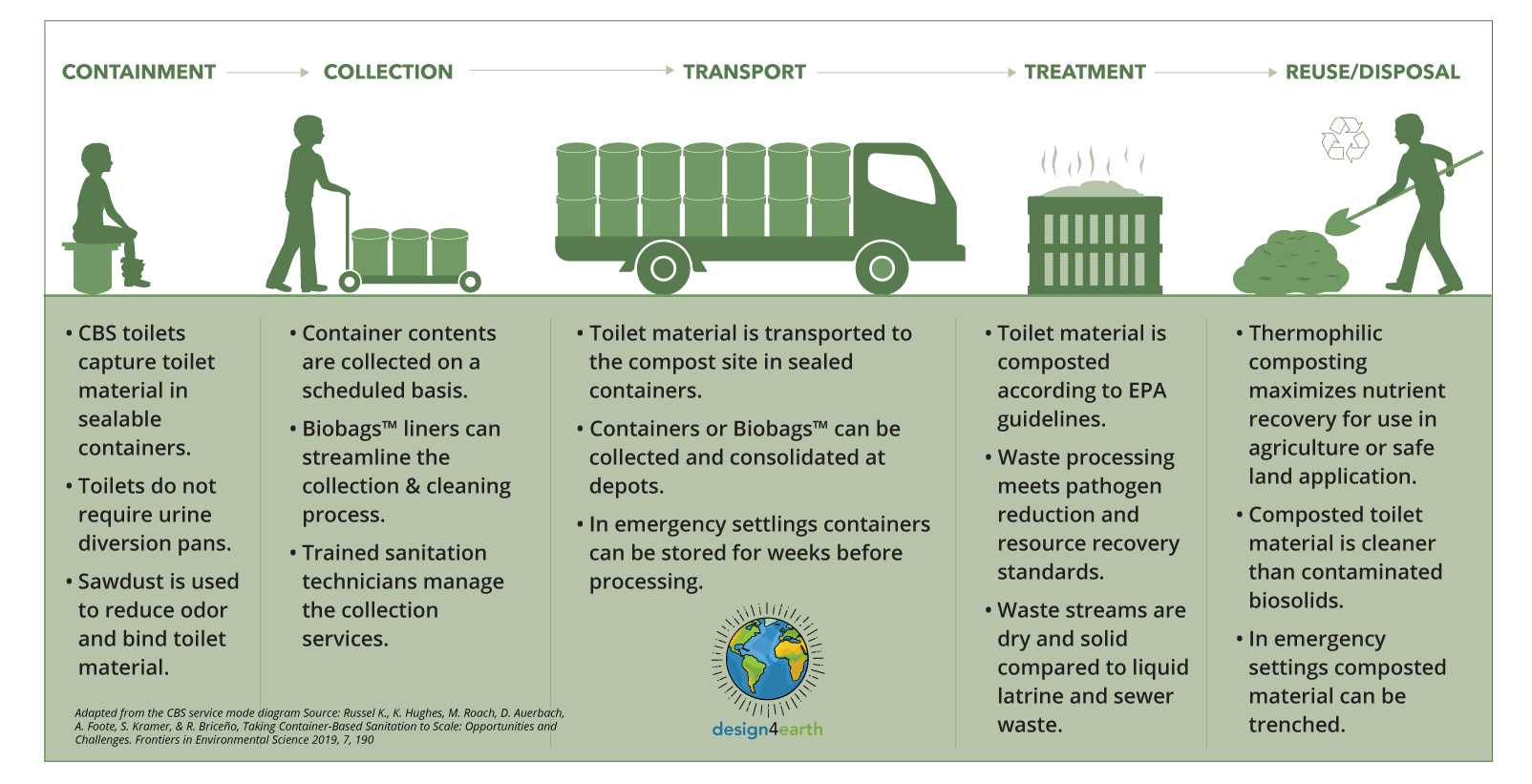
Click image to enlarge: The container-based sanitation (CBS) pilot from September 2024 through November 2025.
Over the pilot period, the team composted more than 250 five-gallon containers of material, exceeding 2,500 pounds by weight. After nine months of monitoring, samples from Soil Control Laboratories in Watsonville confirmed the finished compost met both EPA Class A Biosolids standards and CalRecycle guidelines for land application, with fecal coliform below 7.5 MPN per gram dry weight and Salmonella below 3 MPN per 4 grams dry weight. This was achieved without thermophilic composting conditions, which suggests there’s meaningful room to improve throughput and reduce cure time with optimized process management.
A Feedstock Stream Already in the Field

Feedstock is mixed in with organic matter at the Watsonville pilot site.
The pilot surfaced the reality that a substantial population in rural and mountain communities already generate this waste stream with nowhere legal to take it. Participants in Santa Cruz and Mendocino Counties had been using compost toilets for years — in some cases over a decade — and were composting humanure incorrectly on-site, disposing of it in curbside trash, or informally dropping pails at transfer stations. Transfer station staff confirmed this was happening regularly. The demand for legitimate, permitted drop-off infrastructure is real, widespread, and currently going unmet.
The pilot’s strongest near-term recommendation is a depot-based model where participants bring properly bagged material to designated bins at transfer stations, rather than relying on household collection. This approach is operationally simpler, protects participant privacy (many were reluctant to have county personnel visit their properties), and could integrate efficiently with existing organics infrastructure that composting operators already manage.
The Regulatory Obstacle
The catch is that container-based sanitation occupies what the report describes as an “extra-legal” realm in California, either unaddressed or regulated inconsistently across jurisdictions. The pilot team had to negotiate a custom Compost Toilet Material Transportation and Spill Response Plan with the County Environmental Health department just to legally move the material across the county. Early on, a septic hauler’s permit was required — a framework written entirely for liquid waste streams —that had no practical application to a solid matrix. Liability insurance was also denied by one carrier in early 2024, forcing significant project delays before alternative coverage was secured.
The report points to Portland, Oregon’s incorporation of IAPMO’s ( International Association of Plumbing and Mechanical Officials) 2023 Water Efficiency Standard (WE-Stand) into city codes as the most viable regulatory model for California counties to follow. The state’s AB 351, which created a legal pathway for composting human remains, offers a useful precedent argument. If the state can regulate that activity, the case for a CBS framework becomes considerably easier to make.
What to Watch Next
An Ohio State University-funded study led by Nick Kawa, Alisa Keesey, and Ryan Smith is currently underway, collecting qualitative data from pilot participants, wastewater professionals, and local officials on the perceived barriers to legalizing CBS in California, with completion expected in 2027. Participatory workshops in Santa Cruz and Mendocino Counties will follow. Kompotoi, a CBS operator based in Switzerland with established operations in Europe, has also expressed interest in expanding into California.
For composting operators, the practical question is whether existing permitted facilities could accept this feedstock once regulatory frameworks catch up. Based on the Santa Cruz pilot, the composting process itself works. The infrastructure gap is not technical — it’s regulatory and logistical, and both are solvable problems.