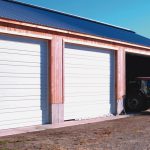

Top Photo: Full Sun Compost operations in Albuquerque, New Mexico. Courtesy of Full Sun Compost.
Albuquerque (NM) Mayor Tim Keller’s 2025 Executive Order on strengthening local food systems directs city departments to coordinate across three core initiatives – expanding neighborhood food access, activating underutilized land for agriculture, and scaling food rescue efforts – at a time when over 1 in 5 New Mexico households face food insecurity, among the highest rates in the country.
The order is framed around access and recovery, but it has direct implications for composting. As more food is grown and distributed locally, and more material is captured through rescue systems, the volume of residual organic waste that needs to be processed locally increases. That demand is beginning to show up in how infrastructure is getting built.
Full Sun Compost is one of the first operators to translate that shift into a physical site. After losing access to a previous property in 2024, the company spent much of the past year trying to secure land in a market where permitting has historically limited options. The effort culminated in a community-backed green bond campaign that helped finance the purchase of a one-acre industrial parcel in central Albuquerque.
“We bought a property that is one acre,” said founder Brad Weikel. “It is right in the middle of Albuquerque. It is zoned industrial and so far things have been going great.”
Full Sun Compost began composting at the site at the end of January. The footprint is tight, with operations designed to maximize throughput within a constrained urban parcel. The company is targeting roughly 100 cubic yards of incoming material per week, producing about 60 cubic yards of finished compost once stabilized.
The site reflects both progress and limitation. It establishes a local processing node in a city that has had little dedicated composting infrastructure, but it also underscores how difficult it remains to site and scale facilities.
Policy is starting to respond on that front. Just this week, the City’s zoning code was updated to define compost facilities and clarify where they are encouraged. The change added small, medium, and large compost facilities to the land use table, and added composting to the community garden definition. While the change does not materially affect Full Sun Compost’s current site, it reduces ambiguity and creates a pathway for additional community-scale projects.
“What it does is make it easier for smaller operations to pop up as secondary users under different zoning codes,” Weikel said.
At the same time, the City has focused on expanding access to composting through community drop-off locations rather than building out a full municipal collection system. “Affordability and access are the real challenges,” Weikel said. “Creating drop-off sites at community centers is where the city can have the biggest impact.”
That approach keeps participation growing while allowing processors to scale incrementally. The next step for Full Sun Compost is increasing processing efficiency and output at its existing site. That is where Green Mountain Technologies has played a direct role.
Through its 1% for the Planet commitment, Green Mountain Technologies (GMT) donated an aerated static pile system to Full Sun Compost, enabling the company to move from manually managed piles to a more controlled process. The system is expected to increase capacity toward 7,000 cubic yards annually while reducing operating costs by more than $1,000 per month and improving compost quality.
“Composting at scale on a small urban property is a huge logistical challenge,” Weikel said. “This allows us to produce higher quality finished compost in less time while diverting more of our local community’s food waste from the landfill.”
Orion Black-Brown, president of GMT, believes community composters have been a primary force behind food waste composting in the United States over the last decade. “This impact is beautifully highlighted in Full Sun Compost’s story as they create pathways for community members to treat food waste as a resource instead of trash,” notes Black-Brown. “The giveback grant is our way of thanking organizations like Full Sun Compost for their tireless work. We are truly grateful for the accountability and transparency that 1% for the Planet offers us as we continue this journey.”
Albuquerque’s progress comes down to a few things. A site secured through persistence and community backing, a city beginning to clear a path on zoning and access, and donated equipment that will change what Full Sun Compost’s one-acre site can realistically produce and how quickly it can get there.