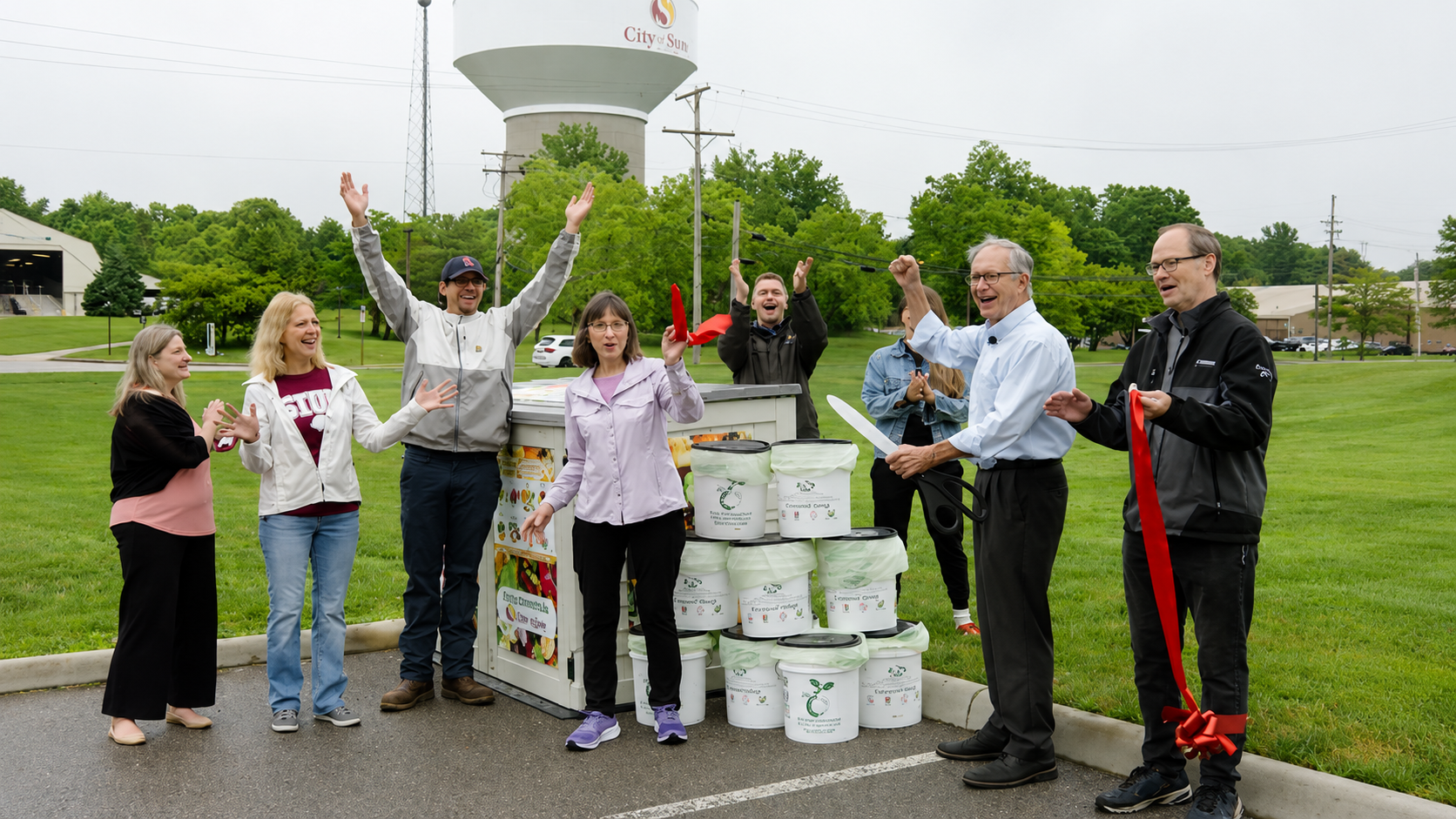
Top: Ribbon-cutting ceremony in Summit County. Photo Courtesy of Rubber City Reuse.
Rubber City Reuse has launched what it describes as the first municipally funded composting program in Summit County, Ohio, giving residents in the City of Stow free, 24-hour access to composting and organics recycling.
The program marks a new phase for Rubber City Reuse, which started seven years ago and recently surpassed 1,000 customers. The company has built its model around accessibility, affordability, and flexibility, with a focus on making composting work for communities that may not be ready for traditional curbside collection or more capital-intensive municipal programs.
“Today we launched the first municipal composting program in Summit County,” Rubber City Reuse announced. “Stow is Summit County’s first municipality to fund a composting program for their residents. We are so proud to work with an amazing community such as Stow on such a vital mission.”
For residents, the program removes one of the biggest barriers to participation — cost. By funding access at the municipal level, Stow is making organics recycling available to households without requiring each resident to pay for an individual subscription. The 24/7 access model also gives residents flexibility to participate on their own schedules, an important consideration for communities building early-stage food scraps diversion programs.
Rubber City Reuse framed the Stow partnership as both a local milestone and a replicable approach for other municipalities interested in organics recycling. The company noted that affordable programs can be designed around a community’s specific needs while still ensuring broad participation.
The significance is not only that Summit County has its first municipal composting program, but that the program is being launched as a public service. As more cities look for ways to reduce greenhouse gas emissions and divert food scraps from disposal, Stow’s model offers a practical entry point, using municipal funding and a flexible access structure to make composting available to more residents from the start.