Top Photo: Courtesy of Northern Tilth
Paula Luu
The Middle East conflict has exposed a critical vulnerability in American agriculture. About one-third of global seaborne fertilizer trade normally passes through the Strait of Hormuz, and the Gulf region exports nearly half the world’s urea and 30% of its ammonia. When geopolitical tension threatens this chokepoint, American farmers pay the price almost immediately.
Natural gas, the primary feedstock for nitrogen fertilizer production, saw a 20% drop in output. Prices spiked as much as 70% in some global regions. U.S. fertilizer costs alone jumped approximately 40% in the first month after the conflict began. The timing proved catastrophic. The war started precisely when American farmers were beginning spring planting, with fertilizer supply at roughly 75% of normal levels by mid-March.
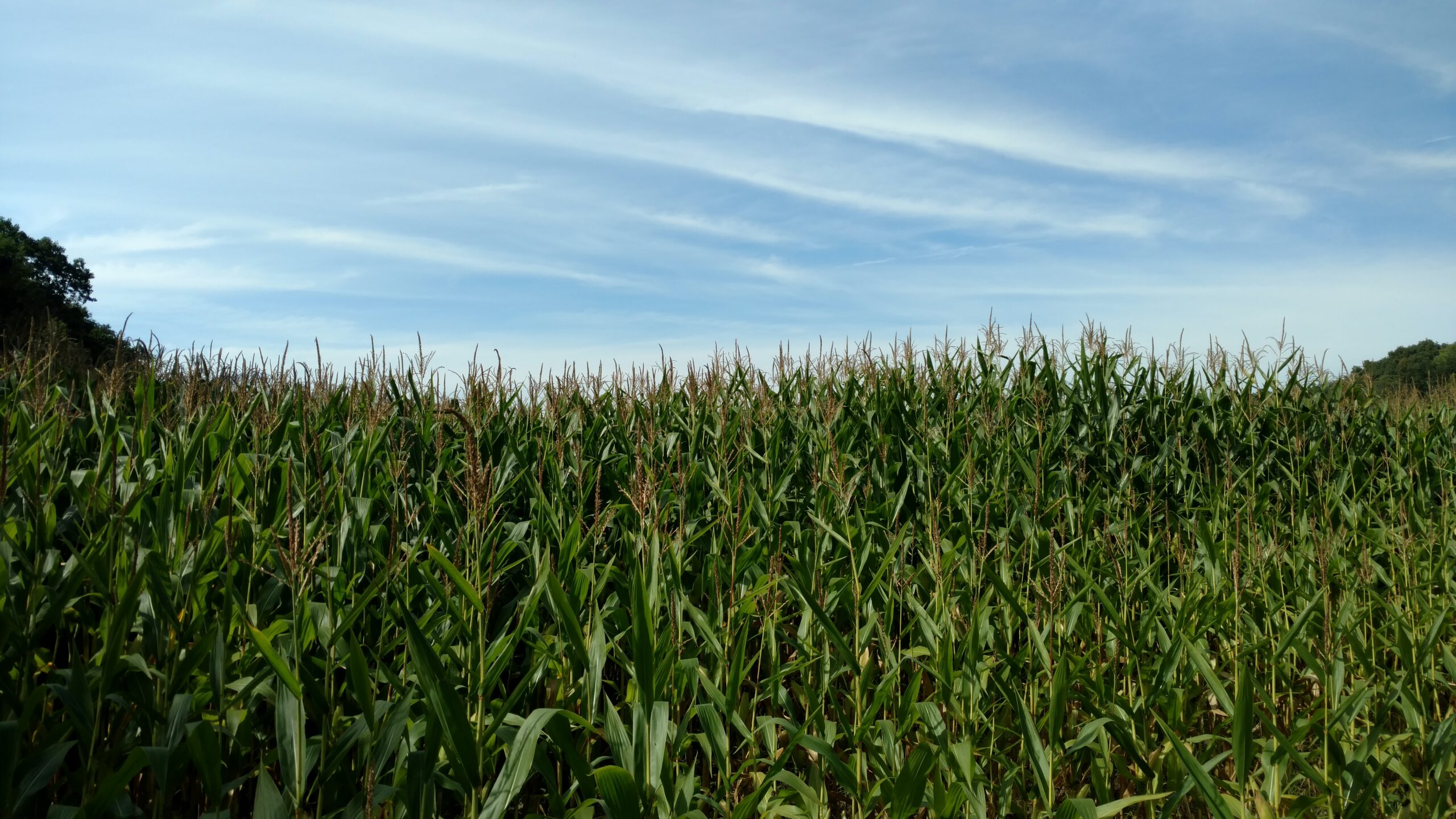
For growers in the Corn Belt facing the worst of these pressures, the choices became brutal. Apply less fertilizer and reduce yields. Switch to soybeans, which require fewer inputs. Plant fewer acres entirely. Each decision carries cascading consequences. Less corn means less livestock feed, less ethanol production, and less raw material for hundreds of other products. Beef prices were already up 16% since March 2025, and the fertilizer crisis will only accelerate that trajectory.
This is not the first time American farmers have faced this particular squeeze, notes a press release jointly issued by the US Composting Council (USCC) and the Institute for Local Self-Reliance (ILSR) in April. The release cites a 2022 survey by Wang et. al which shows that during the last significant fertilizer price spike, U.S. farmers turned to sustainable agriculture practices, including compost application, to relieve the burden on their operations.
That precedent matters because it demonstrates that farmers already understand compost as a proven tool for managing input costs during supply disruptions. Amid the current crisis, the compost solution is one that policymakers and agricultural discussions overlook entirely. Compost offers American farmers a path to reduce vulnerability to foreign supply shocks and volatile global markets.
A Made-in-America Alternative
Compost has long played a role in maintaining soil fertility, but decades of reliance on synthetic inputs have shifted many growers away from locally produced soil amendments and toward globally sourced fertilizers.
The distinction between synthetic fertilizers and compost runs deeper than cost. Brenda Platt, Director of ILSR’s Composting for Community Initiative, characterizes the difference sharply. “Fossil-fuel-based synthetic fertilizers are like steroids providing a quick boost of nutrients directly to plants for fast growth but do nothing for soil health,” she notes. “In contrast, compost, which is a made-in-America product, provides a feast for the soil, adding organic matter and fostering beneficial microbial life. This leads to slow release, long-term fertility and so many other benefits from better soil structure to higher water-holding capacity, which can make the difference in whether a farmer’s crop survives drought conditions or not.”
What the Research Shows
The practical results from using compost as a soil amendment are measurable and substantial, as many articles over many years in BioCycle have reported. Research on sugarcane fields in southern Florida demonstrated that compost application lowered the annual nitrogen fertilizer requirement by an average of 38%, with many studies showing even higher reductions in overall nutrient needs. Combining compost and fertilizer application practices can lead to healthy, resilient soils and ideal growing conditions.
“Vegetables, fruits and organic farms have always been the first to transition, because their runway is often shorter; mid-size row cropping takes a bit longer to roll out,” says Linda Norris-Waldt, Executive Director of USCC. “At a national scale, we need investment in research and financial support for composting so that we can transition to large-scale agricultural compost application. It’s what our Conservation Innovation Grant through USDA’s Natural Resources Conservation Service (NRCS) is all about.”
The USCC has also been working to re-educate compost producers on labeling requirements, particularly the distinction between compost used as a soil amendment versus fertilizer.
Vera Fabian, who operates Ten Mothers Farm in North Carolina with her family, has tracked her farm’s transformation over eight years. “We’ve put down a lot of compost over those years,” she explains. “As a result we’ve seen our soil improve pretty dramatically, to where we don’t use nearly as much fertilizer as we used to. We use only 20% of the fertilizer that we had been using four years ago, and we attribute this to higher organic matter thanks to all the compost we spread. We buy about 150 cubic yards of compost each year.”
The economic advantage becomes obvious to farmers willing to invest in soil health. Ned Foley operates Two Particular Acres in Pennsylvania and produces much of his farm’s fertility on-site. “In the face of all the chaos and uncertainty in this world caused by war and politicians, I take some comfort in the fact that my farm’s fertility comes from a stable supply of local, sustainable and healthy compost,” notes Foley.” And because we make it ourselves on the farm, our fertility is a positive source of good revenue rather than a volatile cost center. We are blessed at Two Particular Acres that the Strait of Hormuz has absolutely no impact on our fertility thanks to compost.”
Ellen Polishuk, who works with growers transitioning toward soil-based systems through her company Plant to Profit in Maryland, identifies what farmers actually need to make the transition. “Farmers want to use compost as a way to build soil health and thus profitability, while reducing their reliance on synthetic fertilizers and the volatile markets that determine their price,” she says. “In order to do that, they need access to high-quality compost, specialized equipment, financial support, and technical assistance.”
Policy Tools Already in Place
The policy infrastructure to support wider adoption already exists. In 2022, the NRCS established the Soil Carbon Amendment (Code 336) as an official Conservation Practice Standard. Using this program, farmers, ranchers, and forest stewards can apply for financial assistance by working with their regional NRCS office. State and regional Technical Service Providers develop conservation plans that identify natural resource concerns and prescribe practice standards to address each one.
“In 2023 when the war in Ukraine began, USDA made a great move with the Fertilizer Production and Expansion Program to increase domestic production of fertilizer, which included compost,” notes Norris-Waldt. “With the last awards made in early 2025, this is a program we need to regenerate in the U.S. to put American farmers and businesses first.”
Resources available to farmers include the University of Oregon’s decision guide “On-Farm Composting-Will it Work on My Farm,” which helps growers assess whether on-farm composting suits their operation. The guide provides resources to support better composting on farms and encourage composting with community needs in mind. The University of Massachusetts Amherst offers guidelines for organic fertilization that instruct growers on compost application based on their local soils’ biological, physical, and chemical characteristics.
A Strategic Opportunity
The current crisis offers a strategic opportunity. When farmers understand that Strait of Hormuz disruptions directly affect their bottom line, the case for local compost infrastructure becomes impossible to ignore. Building that infrastructure, and the supply chains behind it, requires policy attention and investment now.
The USCC and the ILSR are urging Americans to consider compost not merely as an environmental practice but as essential infrastructure for agricultural resilience. Compost reduces synthetic fertilizer dependence, has proven effective during previous price spikes, and can be produced domestically at scale. The alternative is watching American agriculture remain dependent on shipping lanes and foreign production facilities, vulnerable to the next crisis.