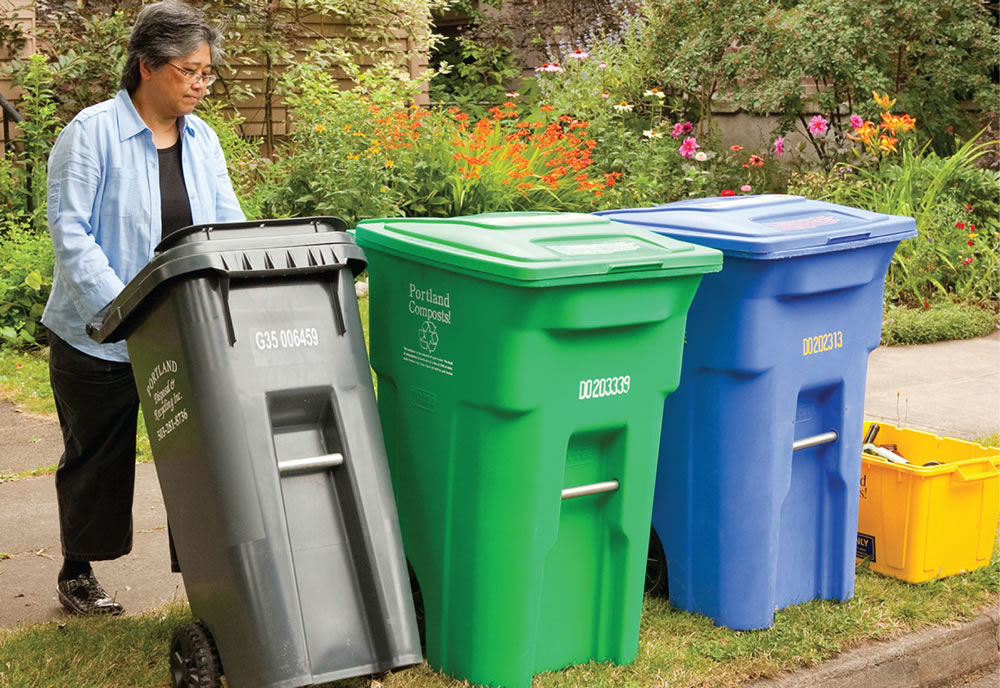
Top Photo: Photo courtesy of City of Portland
The Oregon Department of Environmental Quality (DEQ) is launching two grant opportunities this fall to expand food waste processing capacity and strengthen community-scale composting across the state.
The funding is part of Oregon’s federal Climate Equity and Resilience Through Action (CERTA) grant program. It is backed by a $197 million Climate Pollution Reduction Grant from the U.S. EPA. DEQ’s current program page lists $25 million for large-scale food waste processing projects and $1.7 million for small-scale composting projects, for a total of $26.7 million. Applications are scheduled to open September 23 and close November 19, 2026.
For large-scale projects, DEQ anticipates funding 18 to 20 projects, with individual awards of up to $2 million. Eligible applicants include permitted composting and anaerobic digestion facilities seeking to expand food waste processing, facilities looking to begin accepting food waste, and developers proposing new composting or AD facilities. Eligible expenses include equipment such as screeners, grinders, shredders, depackagers and aeration systems, as well as supporting infrastructure, including electrical upgrades, receiving areas, piping and leachate management improvements.
Another $1.7 million is designated for smaller projects designed to expand local food waste collection and composting. DEQ expects to fund between 6 and 20 projects, with awards ranging from $50,000 to $249,999. Eligible applicants include nonprofits, local and Tribal governments, businesses and educational institutions.
Small-scale funding can support community composting systems, food scrap drop-off sites, collection pilots, compost end-use projects tied to local food production, and workforce development. Examples include food waste collection pilots at multifamily properties, on-site composting at schools and farms, and projects connecting locally produced compost with urban farms or community gardens.
The investment comes as Oregon continues working to increase food waste recovery. DEQ has identified limited processing capacity as one barrier to diverting more food scraps from disposal, making infrastructure expansion a central component of the state’s strategy.
Awards are expected beginning in late 2026 or early 2027, and all funded projects must be completed by March 30, 2029.
Learn more: Oregon DEQ Food Waste Processing Infrastructure Grant page