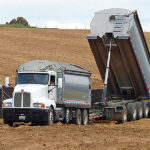

Top photo: Fertile Earth delivers recovered preconsumer food collected from businesses in Palm Beach County to a participating farm, where it is used as animal feed through Palm Beach County’s Food-to-Food Recycling Program. Photo credit: Abel Klainbaum/Fertile Earth.
Palm Beach County, Florida, has a new option for recovering commercial food scraps. Fertile Earth, a South Florida organics recycler, has received authorization from the county’s Solid Waste Authority to collect eligible food scraps and deliver them to farms for use as animal feed.
The green light has been given to a new plan that turns leftover food into animal feed. This all started with a decision made in 2025 to find a way to reuse food scraps from businesses. Now, Fertile Earth has become the first company to meet the requirements and make this idea a reality.
Fertile Earth has a program that collects preconsumer food scraps from businesses, schools, and other places. It takes items like fruit and vegetable peels, old bread, and grains. Meat, dairy products, flowers, or certain types of packaging are not accepted. This program is all about turning old food into something new and useful, and it’s only for plant-based foods. These scraps are collected from places that generate a lot of food waste, like restaurants and cafes.
Fertile Earth is already making a big impact, with its program currently being used at seven commercial sites, including a stadium and six stores belonging to a big supermarket chain. The company is also talking to a brewery and another stadium, with hopes that they will soon be joining the program.
Fertile Earth has made a great start, saving ~418,000 pounds of food waste (209 tons) in just a few months. Right now, it’s taking the recovered food to farms outside Palm Beach County, but the company is working on building a network of local farms to partner with. As the program grows, Fertile Earth is making sure to follow all the rules and regulations in the county, so it can keep collecting and delivering food safely and efficiently. This is a big step towards reducing food waste and helping the environment.
The way the program works is that it’s based on a service where people pay for what they get. Companies that produce a lot of waste pay Fertile Earth to take it away and transport it. On the other hand, farms that join the program get food for their animals at a really low price, which helps cover the cost of getting it to them.
“Our goal has always been to help communities recover the greatest possible value from surplus food,” said Dr. Lanette Sobel, CEO of Fertile Earth. “We’re honored to have been granted this authorization for the Food-to-Food Recycling Program to help Palm Beach County businesses recover valuable food resources while supporting local farms.”
Fertile Earth launched its operations in 2008, and for over 18 years, it has been helping to reduce food waste in South Florida. It services a diverse set of customers including schools, restaurants, supermarkets, sports venues, and farms. It operates in a few different counties — Miami-Dade, Broward, and Palm Beach — and the Florida Keys. In addition to food recover, the company has a composting/vermicomposting operation.