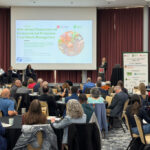

Top photo: Vanguard Renewables CEO Michael O’Laughlin at the June 2026 groundbreaking for the company’s anaerobic digester at Wagner Dairy in Litchfield, Minnesota. Photos courtesy of Vanguard Renewables.
Paula Luu
For those following developments in the anaerobic digestion sector, Vanguard Renewables’ acquisition of Generate Upcycle’s North American assets is familiar news. The transaction adds five anaerobic digestion and depackaging facilities in upstate New York and Ontario to Vanguard’s portfolio. The assets have approximately 565,000 tons of annual food waste processing capacity and produce about 1.1 billion cubic feet of renewable natural gas (RNG). The acquisition nearly doubles Vanguard’s operating capacity, bringing its portfolio to 19 facilities.
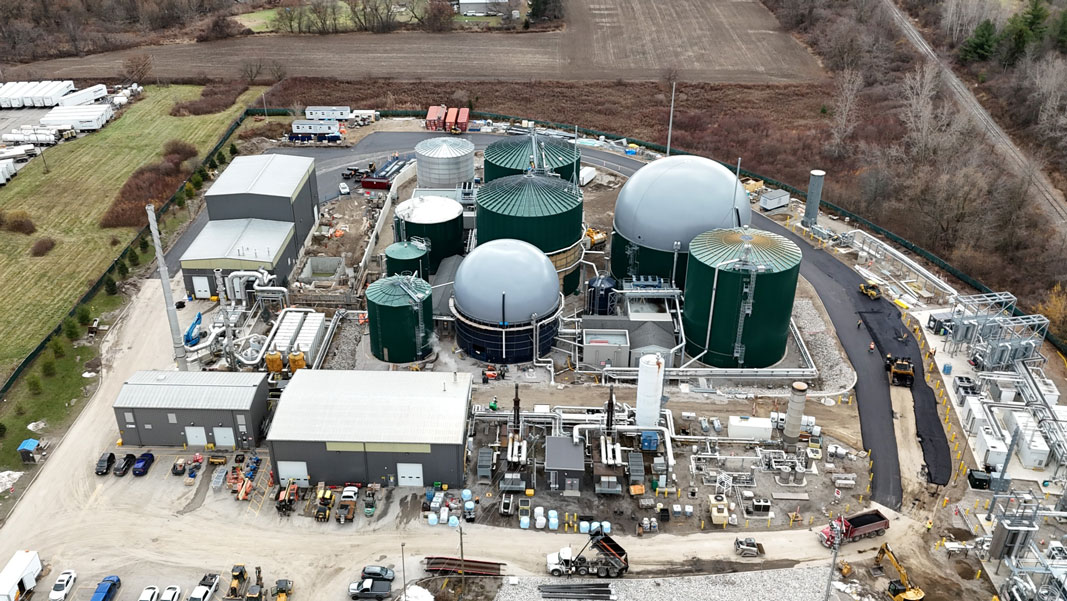
Vanguard Renewables’ anaerobic digestion facility in London, Ontario, formerly part of Generate Upcycle. The site is Vanguard’s first in Canada’s Clean Fuel Regulations market.
For Vanguard CEO Michael O’Laughlin, who joined the company in December 2024, the Generate acquisition is as much about experience running food waste facilities as it is about capacity. “Food waste AD is challenging,” O’Laughlin said. “Anyone who has done it at scale understands that. Success comes from being able to execute consistently across a large operation and having the right capabilities built into the model.”
The transaction comes as Generate Capital is shifting its investment priorities. Between 2016 and 2022, Generate Capital acquired a portfolio of waste processing and anaerobic digestion facilities, eventually consolidating the operations under the Generate Upcycle brand to establish a global organics recycling platform. In September 2026, Generate Capital announced the sale of its entire Generate Upcycle portfolio, comprising 12 facilities across the United States, Canada and United Kingdom. The assets were sold in two separate transactions. Vanguard Renewables acquired five North American facilities in upstate New York and Ontario, while UK-based Pinta Energy, part of the ABIO Group, acquired seven facilities in the United Kingdom. The divestment marked Generate Capital’s exit from its anaerobic digestion platform as the investment firm redirected capital toward supplying power to large energy users, including data centers. Vanguard, meanwhile, is adding food waste infrastructure and experienced operators in the Northeast and Great Lakes region.
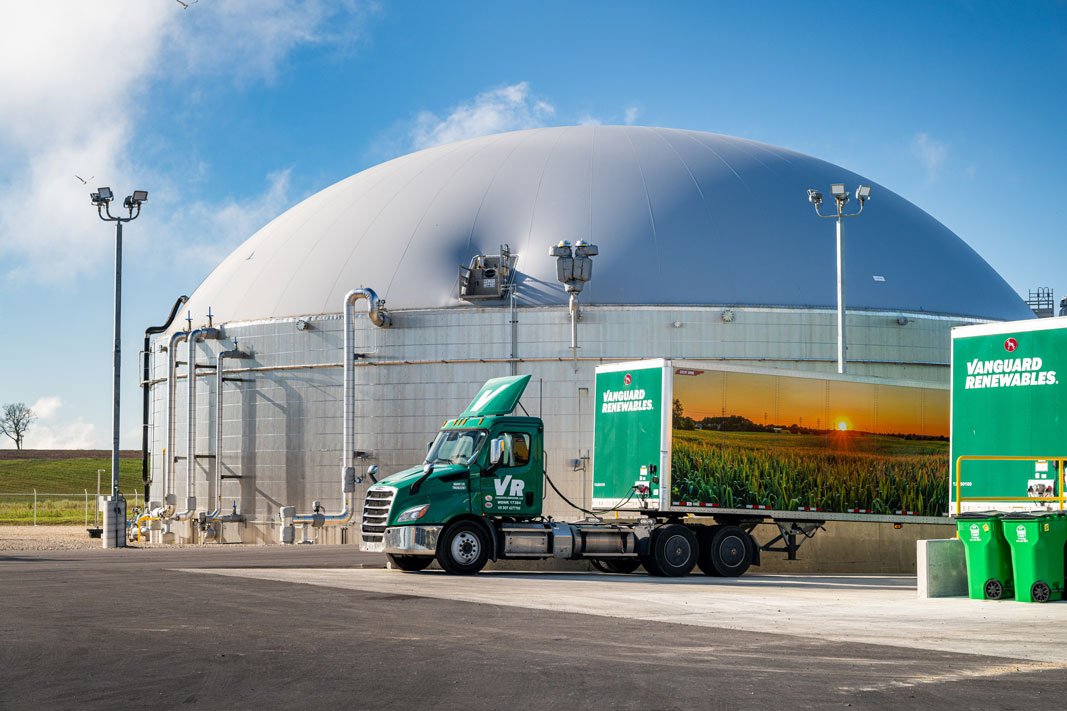
A Vanguard Renewables collection truck at the company’s integrated depackaging and digestion facility in Eden, Wisconsin.
From Development To Operations
Before joining Vanguard, O’Laughlin spent much of his career in manufacturing. He began at GE Aviation, worked in missile defense, and spent roughly 14 years managing filtration, insulation and powdered metals businesses, including operations overseas. His experience outside the AD sector informs how he assesses the industry.
Policy incentives and investor interest helped finance the first wave of RNG and food waste AD projects. With more facilities in operation, companies must manage changes in the wastes they receive, equipment maintenance, digester biology and customer service. O’Laughlin sees a shift in emphasis from financing and building facilities to running them reliably.
The challenge is particularly apparent in depackaging. Most types of packaging can be processed using established approaches, O’Laughlin said, but not every food waste type contained in the packaging is well suited for anaerobic digestion. Depending on the composition and characteristics of the organic material, another recovery pathway may be more appropriate. “In those cases” he adds, “we can work through our network of third-party partners to identify alternatives such as composting, or other recovery solutions that keep it out of a landfill.”
He points to manufacturing as a useful comparison. Toyota, O’Laughlin noted, became known for allowing competitors to tour its plants because seeing the production system did not mean they could reproduce the culture and practices required to run it. “I could tell all of my competitors every secret that we have, and it wouldn’t matter,” he said. “The value isn’t in a single idea or process, but in building the culture, discipline, and operational excellence needed to deliver consistently over time and across a broader network.”
O’Laughlin expects further consolidation among food waste AD businesses. Operating expertise takes years to develop, he said, and can be difficult to transfer from one facility to another.
Expanding Organics Services
O’Laughlin wants Vanguard to be known as a leading organic waste services company in North America, not only as an RNG producer.
Over the past five years, Vanguard has invested in hauling, route management and direct relationships with food waste generators. Generate, by comparison, relied more heavily on municipalities and third-party suppliers for feedstock. Vanguard plans to pair its generator relationships and collection services with the Generate team’s plant operating experience, including sharing practices among depackaging sites.
Vanguard’s own integrated digestion and depackaging network has grown quickly. Its facility at Dinnerbell Farms in Eden, Wisconsin, was commissioned in May 2025, followed by River Falls, Wisconsin, in December 2025 and Oakmulgee Dairy Farm in Amelia Court House, Virginia, in April 2026. In February 2026, the company also acquired a depackaging facility in St. Paul, Minnesota. With several sites only recently online, Generate’s years of experience managing digester biology and plant operations adds depth across the network, while Vanguard can bring its commercial collection model to the acquired facilities in New York and Ontario.
The acquired sites also extend Vanguard’s coverage between its Great Lakes operations and New England network. That footprint could make it easier to serve larger food waste generators seeking fewer service providers across multiple locations.
“Many of these customers don’t want to deal with a hundred vendors,” he said. “They’re increasingly looking for an integrated solution and a trusted partner that can help manage their program across different waste streams and geographies.”
The services business offers another route into new markets. Vanguard can establish hauling operations and generator contracts before investing in depackaging equipment or a digester. Those investments require progressively more capital, allowing the company to assess feedstock supply and customer demand before building processing infrastructure. That approach does not require a digester in every market where Vanguard provides organics collection services.
Acquisitions And New Development
Vanguard is also changing the way it approaches its growth strategy. Two years ago, the company announced a goal of operating 100 digesters by 2028. Its long-term ambition of building a large national network remains, but the company now measures progress by the strength and reach of the overall platform rather than by digester count alone.
“A few years ago, we were measuring success by how many digesters we could build,” O’Laughlin said. “Today, it’s about creating a reliable organics recovery network that customers can depend on.”
Greenfield development remains part of that strategy. In June 2026, Vanguard broke ground on a new anaerobic digestion facility at Wagner Dairy in Litchfield, Minnesota, which it expects to commission by the end of 2027. Growth will also come from strategic acquisitions, such as the St. Paul depackaging facility and the Generate portfolio, along with improving the performance of existing facilities and expanding the services and recovery pathways Vanguard offers customers.
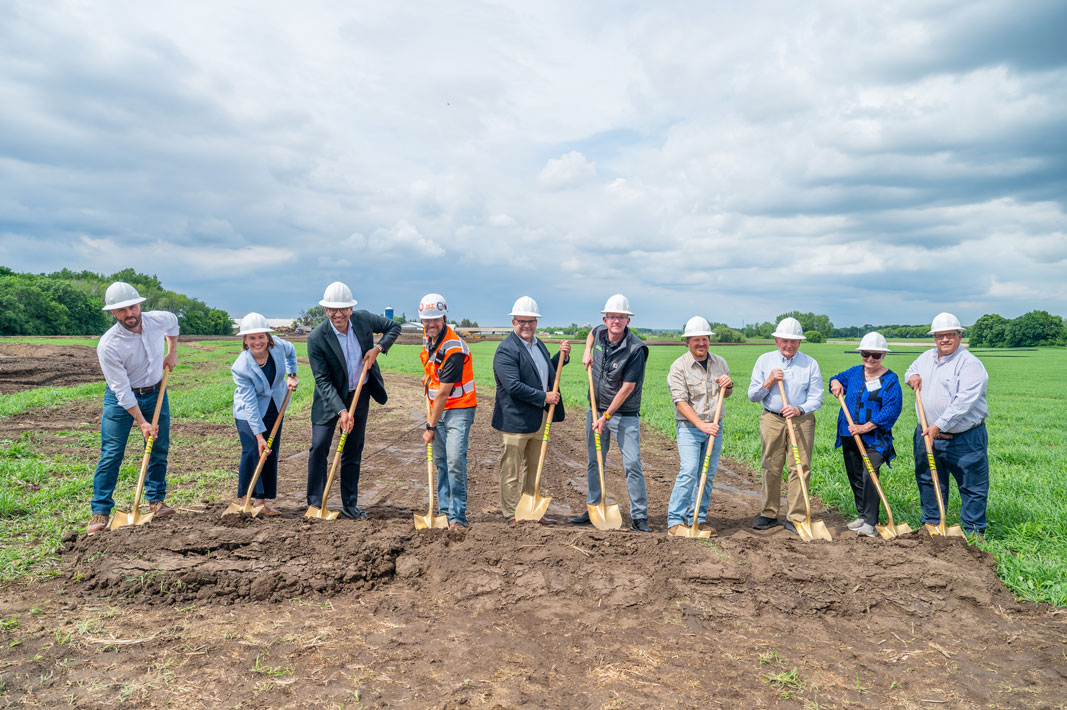
Vanguard Renewables, CenterPoint Energy and farm partners break ground at Wagner Dairy in Litchfield, Minnesota, in June 2026. The digester is expected to be commissioned by the end of 2027.
New digesters can take years to develop, permit and construct. Acquiring operating infrastructure enables Vanguard to expand its processing footprint and serve customers without waiting for a greenfield project to come online.
The Generate assets also differ from Vanguard’s traditional Farm Powered model, which places digesters on host farms. Although the acquired facilities in New York and Ontario are not located on farms, the digestate they produce is used in agriculture through relationships with local farming operations. O’Laughlin considers that agricultural outlet an important connection to Vanguard’s existing business model.
O’Laughlin said digestate markets are highly local. County and state policies, along with farmers’ familiarity with the material, can determine whether a facility must work to find an outlet or receives inquiries from farmers seeking it. He described markets where farmers actively want digestate and others where regulatory and market conditions make its use more difficult. Expanding those outlets, he said, requires both education and attention to local policy.
The London, Ontario, facility also marks Vanguard’s first participation in Canada’s Clean Fuel Regulations market, giving the company a presence in the Canadian renewable fuels sector and another potential outlet for RNG as regulatory and commercial conditions change in the United States.
Operational Experience And The Next Phase
O’Laughlin does not claim that Vanguard has mastered food waste digestion or depackaging. He described the company as “pretty good” at depackaging, while emphasizing how quickly packaging formats change. Vanguard works with customers on solutions that fit their specific waste streams, and its network now includes hauling partners, third-party recovery and disposal partners, and its own depackaging and preprocessing capabilities. Some materials are an excellent fit for a Vanguard facility, while others are better directed to a different recovery pathway, with the aim of maximizing diversion from landfill.
“The industry is maturing,” he said. “We’re moving from a development mindset focused on building projects to an operating mindset focused on reliability, customer service, and long-term performance.”
That operating experience is central to the Generate acquisition. The five facilities bring trained personnel and operating practices that Vanguard can apply across its existing network, while its hauling and commercial relationships can be extended to the acquired sites.
For O’Laughlin, the next challenge is less a question of how many digesters Vanguard can build than of how consistently it can operate facilities, handle changing food waste streams and provide service across a larger geographic footprint.