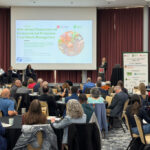
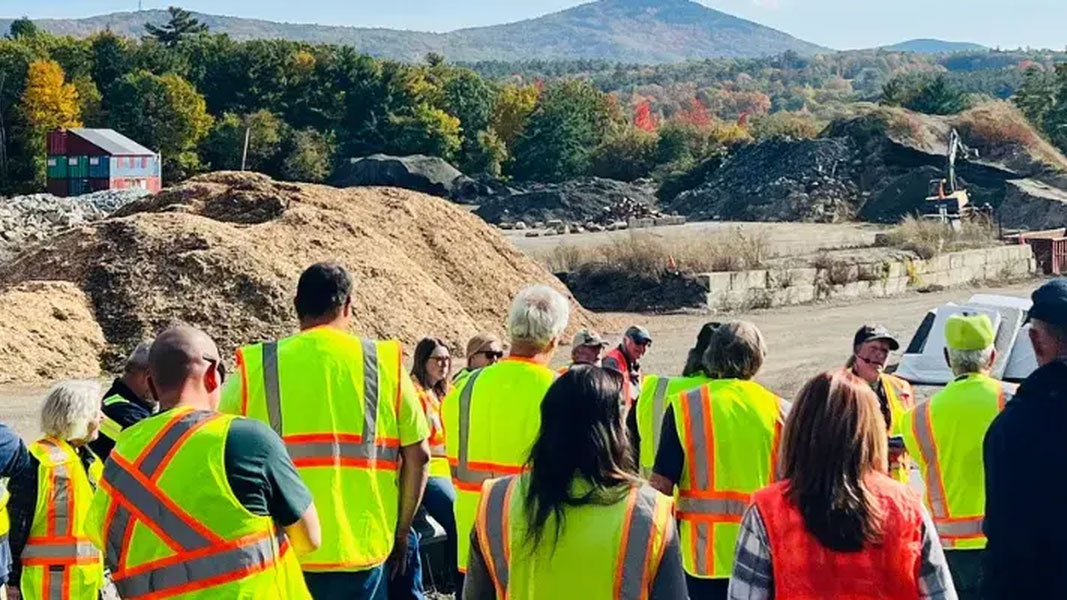
Top photo: Updated from the NH Recycle’s website.
NH Recycles, New Hampshire’s state recycling association, released the findings from its multiyear study, funded by a U.S. EPA Recycling, Education and Outreach grant, to test the effectiveness of various recycling information tools in 30 communities in the northern part of the state. Recycle Right North Country utilized direct mail, radio, social media, videos, updated transfer stations signs, Recycling 101 presentations, door-to-door outreach, Recycle Right Rewards events, recycling bins, operator training, bus tours, roundtables, and more.
Lancaster, Littleton, and Northumberland served as the association’s three partner communities, enabling NH Recycles to take a closer look at what happened before and after the focused outreach.
The project began with ambitious goals: increase residential recycling rates by 10%, increase recycling participation by 5%, improve resident confidence in recycling, and reduce recycling contamination by 10%.
Some lessons learned from the study in the three partner communities carry over to outreach and education efforts to boost participation and reduce contamination in food scraps recycling programs, including drop-off access at municipal transfer stations.
- Participation was measured at the transfer stations, counting vehicles, and weighing trash and recyclables. The three towns already had fairly strong recycling participation, but the outreach did bring in an increase of 3.63%. The takeaway for food scrap programs is that the amount of recycling increased slightly and the amount of trash went down (both by one pound).
- While contamination was on the lower side starting out, the education and outreach campaign resulted in substantially less contamination, reports NH Recycling. “For operators, less contamination means less time pulling trash and unacceptable materials out of recycling” and results in more marketable material. “It also taught us something we did not necessarily expect going into the project: Reducing contamination may be easier than substantially increasing the recycling rate. Helping someone who is already recycling put the right material in the recycling container can sometimes be easier than changing the habits of someone who is not recycling at all.”
- Repetition in outreach and education is key. “Over the course of the project, we held dozens of events and reached well over 1,000 participants,” notes NH Recycles. “The lesson was not that one particular mailer, sign, presentation, or conversation changed everything. It was the repetition. People saw the message at home, at the transfer station, online, at community events, and from the operators they already knew and trusted.”
- The biggest takeaway for food scraps drop-off programs at publicly-operated transfer stations? Transfer station operators are “some of the most important educators in a community.” Being able to ask the operators about what goes where, and can this be included helps residents and businesses using the transfer station drop-off participate correctly.
A concluding lesson learned by NH Recycles is that there is no single “right” recycling program for every New Hampshire community. “Some communities source separate. Some accept more types of plastic than others. Some collect glass separately. Some offer curbside service. Some use pay-as-you-throw. Each program reflects local markets, infrastructure, staffing, costs, and community needs. That variation is part of what makes recycling confusing for residents — and why clear, repeated, local education matters.”