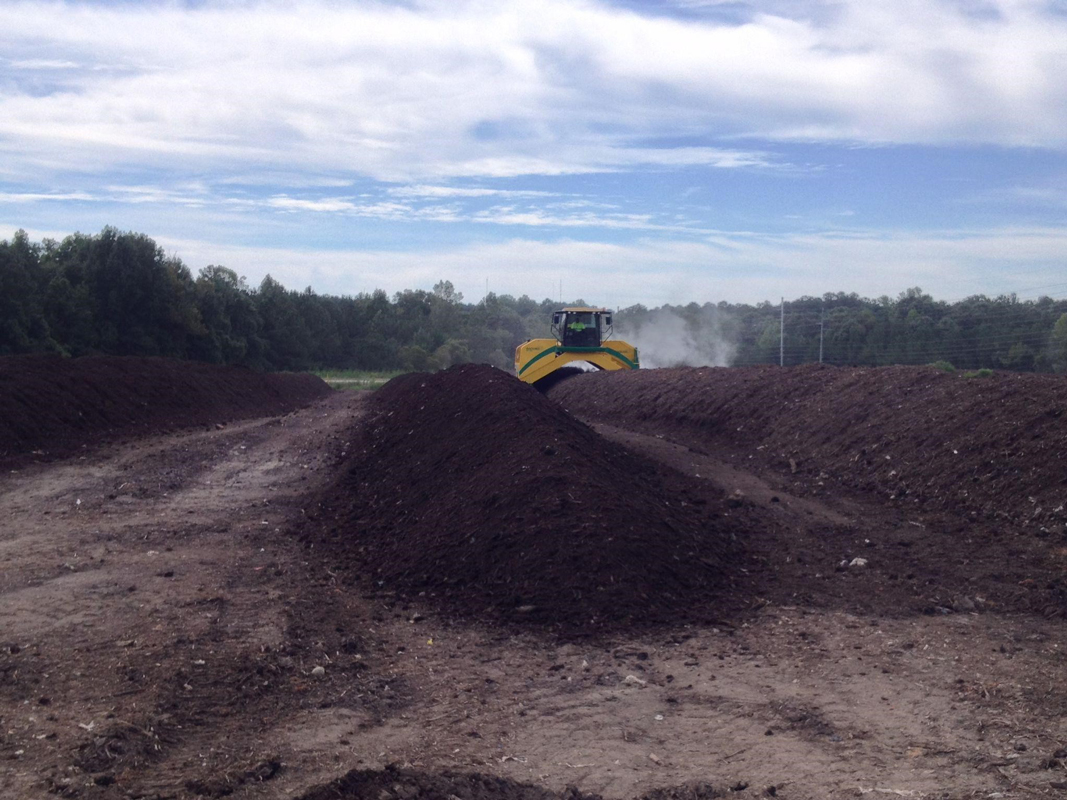
Photo courtesy Wanu Organics
Jorge Montezuma
The composting industry in the United States has a capital problem. Collectively, it needs billions to build the composting infrastructure that would turn the millions of tons of organic waste now landfilled into soil amendments that rebuild soil fertility and resilience. A wide spectrum of capital exists, but many investors and lenders don’t understand the business of composting, and composters don’t always understand how to tap into various forms of funding. Compost Capital Network (CCN) was launched in 2025 to educate and connect composters, haulers, capital, and service providers and to build more local composting capacity. This brief summarizes the upcoming CCN’s first insights report, which distills what seven composters have learned about financing their operations. Those lessons set the stage for the inaugural Compost Capital Summit in December.
The Capital Stack Evolves with the Business
Successful operators have tried many financing options, and the mix changes as they grow. Many begin by bootstrapping and bartering. For example, Noel Lyons, from McGill, secured its first site in North Carolina by processing a large poultry company’s hatchery waste in exchange for rent-free land, which erased a major fixed cost during its most vulnerable years.
As operations mature, grants become catalytic capital. CompostNow, Dirt Hugger, and McGill obtained federal or state grants for facility and equipment upgrades to significantly scale their processing capabilities. Grants like this can act as a form of due diligence. Lenders can view a government grant as positive third-party validation, making subsequent bank financing more accessible.
At the multimillion-dollar stage, operators turn to creative debt, such as agricultural revenue bonds, whose requirements fit composting better than standard industrial bonds.
The Importance of Relationships and Unit Economics
The golden rule for banking is, as Patrick Geraty from St Louis Composting says, “to ask for a line of credit when you do not need it,” because banks are risk-averse and unlikely to extend liquidity during a period of distress. Once you find a banker who understands the business, keep that relationship. Build an on-time payment history and collateral, and work toward dropping personal guarantees.
Pierce Louis, from Dirt Hugger, pointed to roughly 20,000 tons/year as the threshold below which heavy equipment costs too much relative to revenue; find the threshold that fits your region, he says. Some also run capital expenditures through a 12-month payback filter: if the ROI is more than a year, it’s deferred. And because every time a loader touches material it costs money, composters have to get smarter about site layouts and managing operations to protect the profit margins.
Clean Books
Whether you plan to sell to employees or investors, take on large loans, or bring in minority equity partners, financial transparency is one of the biggest drivers of what your company is worth. Operators who know their EBITDA (earnings before income, taxes, depreciation, and amortization) and other financial metrics, and who keep years of financial statements, tax records, and current environmental permits organized in a data room, can negotiate from strength. For example, a founder retained the land beneath the operation he sold and leased it back to the buyer, turning a one-time sale into lasting income to help during retirement.
Finally, use engineering to mitigate financial risk. A founder shared that operational distress was traced back to the aerated static pile bay layout, which caught water in the aeration pipes and starved the piles of the airflow needed to reach compliance temperatures. He also found the concrete pad capped his loader size — running heavier equipment would have cracked it and created a potential $2 million catastrophic compliance failure. The lesson here was to document what each pad is designed to withstand, build to that design, and keep records proving it was built to spec.
Join the Capital Conversation
These are lessons from our peers — those who built the roads we walk on, roads we admire, and those breaking new ground ahead of us. No single path fits every operation but we can all learn from each other.
That is why CCN is bringing public and private operators, haulers, capital, and service providers into one room at the Compost Capital Summit on December 10, 2026 (9–1 pm PST / 12–4 pm EST). It is online and free, so access is open to all.
The agenda expands on these themes and will be presented by experienced professionals: how to match the right capital to each stage of growth, how to make a project financeable before you go looking for money, lessons from many financial partners with different visions, inputs moving facility’s returns, and new financing tools for community composters.
If you plan to build, expand, or eventually transition out, join us. Registration and the full agenda are at compostcapital.com.
Jorge Montezuma, P.E., is the founder of Compost Capital Network and Founder and Principal Consultant of Wanu Organics PLLC.