
Top: Photos courtesy of Mark King, Maine DEP
Mark A. King, Mark F. Hedrich, Linda S. Lee, and Youn Jeong Choi
Agricultural researchers and wildlife officials are often faced with the need to manage mortalities either from routine events or from catastrophic events such as natural disasters (like hurricanes, wildfires or floods) or disease outbreaks such as African Swine Fever or Chronic Wasting Disease. Traditional disposal methods include burial and incineration, but neither is considered a method to safely contain and treat mortalities. Composting mortalities has long been viewed as a preferred solution as it provides an inexpensive mechanism that is environmentally sound and, ultimately, protective of public health. Additionally, animal carcasses are ideally suited for composting, as they provide the bulk of the nitrogen necessary to fuel the compost process (Carr, 2004).
In 2023, researchers from the Maine Department of Environmental Protection (DEP), Maine Department of Agriculture Conservation and Forestry (DACF) and Purdue University developed a simple composting system to manage deer mortalities that had been harvested by the Maine Department of Inland Fisheries and Wildlife (DIF&W) as part of a routine sampling program, along with 1,000 lbs. of contaminated beef products that could not be sold. The compost project took place at a Central Maine solid waste facility.
Containerized Composting
Prior to authorizing the compost study, the facility requested that the trials be conducted in a secure manner ensuring no adverse impacts to the surrounding environment. For that reason, two 30 cubic-yard capacity roll-off containers were selected to help ensure the compost materials and any potential leachate would be contained throughout the study. Additionally, the containers offered the advantage of having a front door that was accessible by skid-steer, facilitating loading and turning of the compost materials easily.
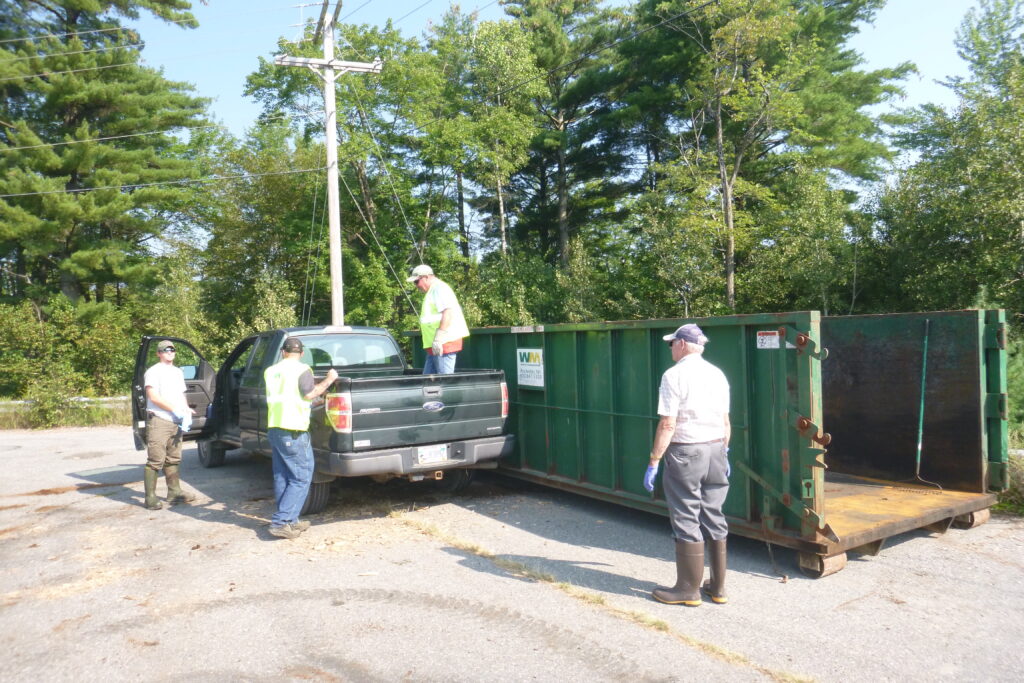
Picture of compost roll-off container showing front gate open for skid-steer access.
Using the “containerized” composting methodology posed a few challenges. First, proper aeration had to be ensured within the vessel to develop optimal aerobic composting conditions. Utilizing an aerated blower/PVC system like the DungsterTM System (Coker, 2024) was considered, but since electricity was limited at the study site, it was decided to attempt to develop a passively aerated system using a coarse wood chip base. This was achieved by placing an 18-inch-thick bed of coarse-textured wood chips (3-4-inch minus) along the entire floor of the container. After placing the bed of chips, the front gate was fixed open, and the entire container was oriented to allow the front opening to receive the full force of the prevailing winds. This action allowed the compost piles to receive optimal (passive) aeration throughout the entire study.
A second challenge involved locating suitable compost feedstocks to use in the trials. The Town of Farmington Fairgrounds, which had an abundant amount of fresh bedded horse manure, was contacted and the material was acquired. As in previous trials, this material proved to be a microbially active medium, making it an ideal material for composting mortalities.
Methods
On September 5, 2023, prior to the arrival of beef products and deer mortalities, compost beds were prepped in two separate 30 cubic yard (yd³) roll-off containers in accordance with USDA-APHIS Livestock Mortality Management protocols (Miller et al., 2017). Each bed started with an 18-inch-thick layer of coarse wood chips (3 yd³ total per bin) to supply adequate aeration during the active composting phase. An additional 18-inch thick layer of horse-bedding (3 yd³ total per bin) was placed on top of each of the wood chip beds. Prior to building the base and beds, a ramp of wood chips was created in front of each container to facilitate skid-steer access.
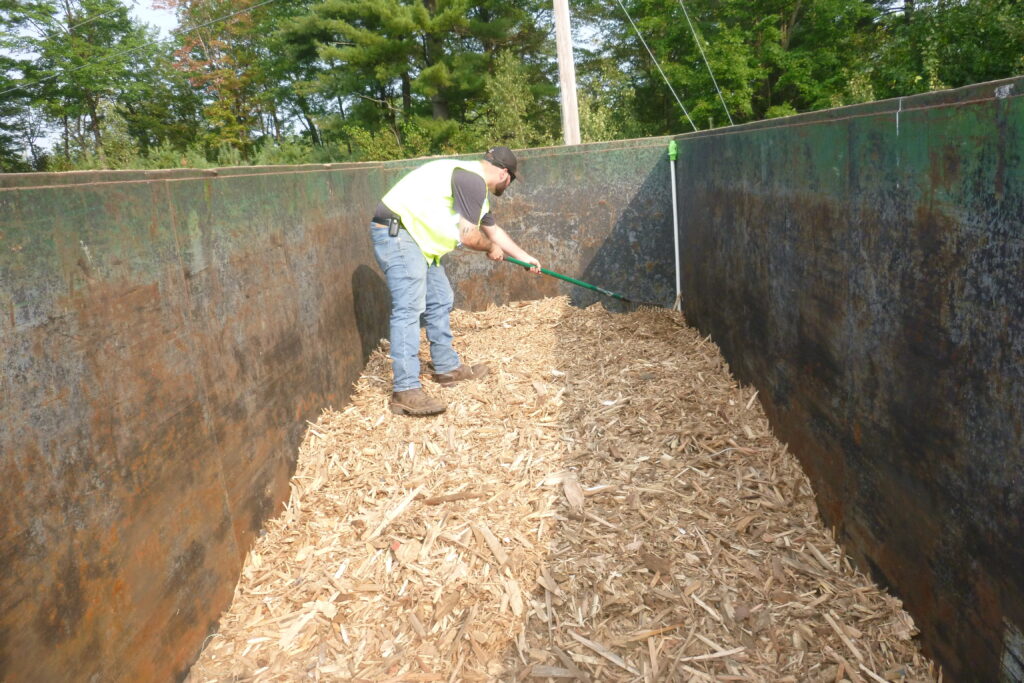
Preparing bed for deer and meat additions by adding 18-inch-thick wood chip base.
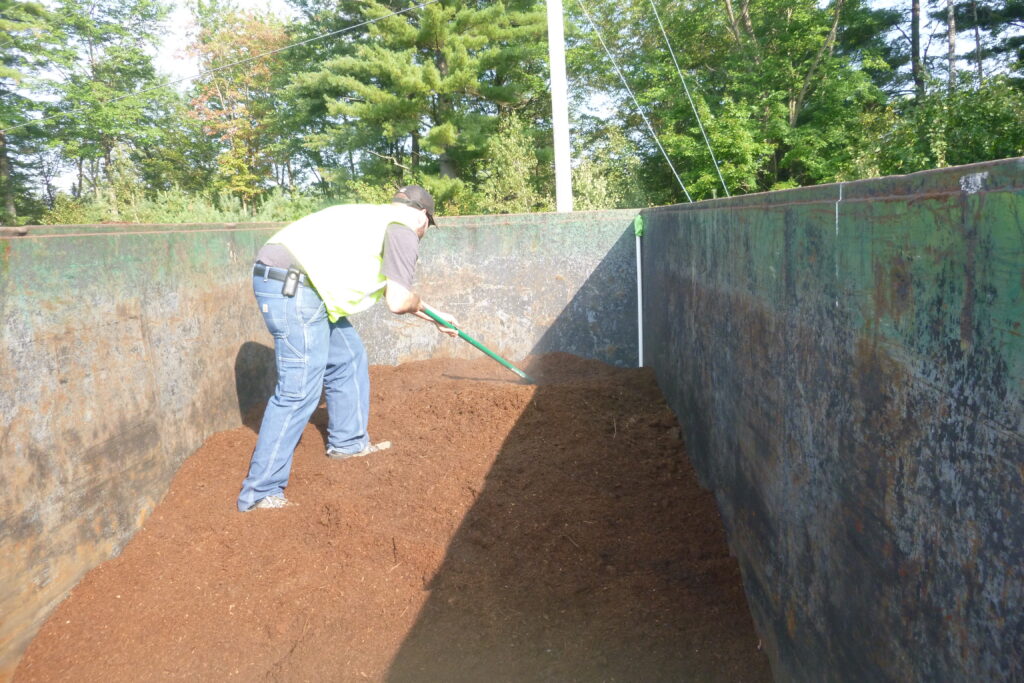
Adding 18-inch-thick bed of hot, active bedded horse manure to prepare bed for deer and meat additions.
During construction of the beds, a PVC well was placed in the corner of each bin to collect any leachate that might be generated during the study. To ensure that all leachate was captured, the front of each roll-off was elevated slightly to encourage flow towards the rear of the containers.

Photo depicting PVC slotted well and placement in roll-off for leachate collection.
On September 6, 2023, the first trial, which included 1,000 lbs. of beef, was constructed in Bin #1 . The composting pile was made up of a variety of beef products including chops, hamburgers, livers, and various steak types. Following the addition of the meat products, a generous cover of bedded horse manure 36-inches thick (3 yd³ of bedded horse manure) was applied to facilitate initiation of the active compost phase. Following pile construction, two Reotemp® thermometer probes were inserted (one at the one-foot level and a second at the three-foot level). Taking these two temperatures daily allowed the team to carefully manage the composting process so that optimal composting conditions were maintained throughout the study.

Meat added to bed to create beef compost pile in Bin #1.

Addition of 36-inch-thick cover of bedded horse manure to complete beef compost pile.
On the evenings of September 5-6, 2023, DIF&W staff harvested a total of 9 deer (3 bucks, 4 does and 2 fawns), totaling 1,100 lbs., from several local farm fields. The mortalities were placed on the compost bed in Bin #2 and covered with a 36-inch thick cap of bedded horse manure. Similarly to Bin #1, two thermometer probes (one-foot and three-foot long) were inserted into the center of the newly formed pile.

Deer carcasses arranged on bed for deer compost pile.

Deer carcasses arranged on bed as layer of 36-inch-thick cover of bedded horse manure is added to complete deer compost pile in Bin #2.
In total, Bin #1 (Beef) contained 3 yd³ of wood chips (base), 3 yd³ of bedded horse manure (bed), 1,000 pounds of beef (equivalent to 2 yd³), and 3 yd³ of bedded horse manure as a final cover. Bin #2 (Deer) held 3 yd³ of wood chips (base), 4 yd³ of bedded horse manure (bed), 9 deer, and 4 yd³ of bedded horse manure as a final cover. Finally, to provide extra aeration, the front door of the roll-off was propped-open and the entire vessel was rotated until the opening was in the direct pathway of the prevailing winds. Image below shows the final trial setup.
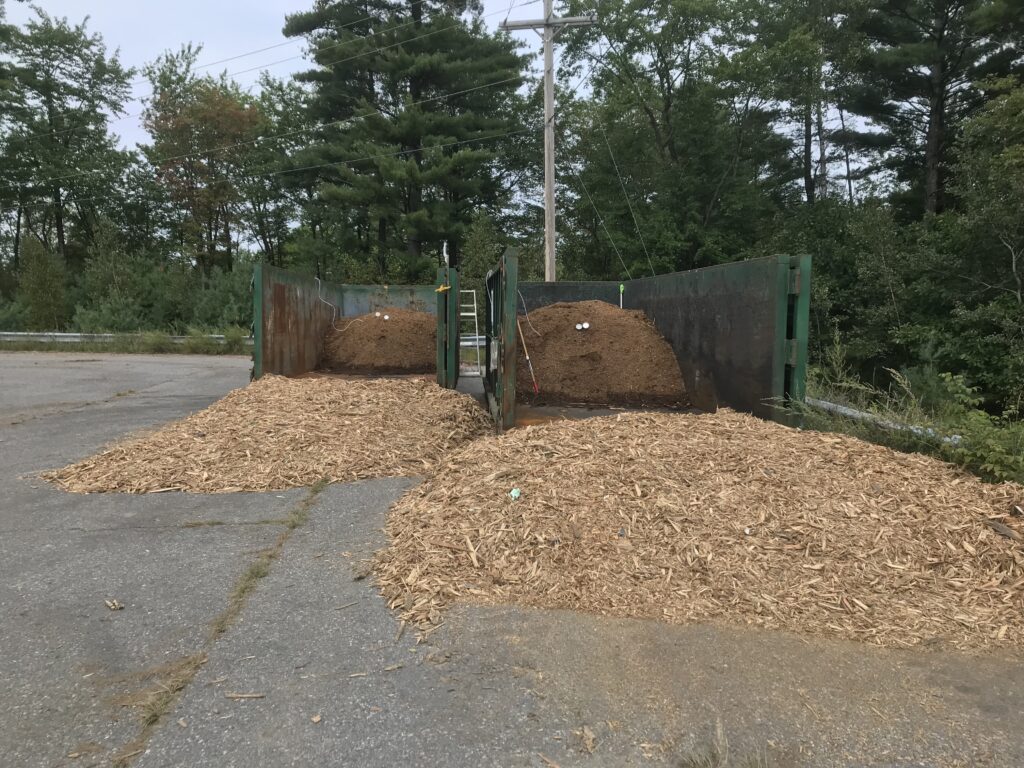
Roll-off containers with doors propped open and openings oriented towards the prevailing winds.
Results
Temperature Performance: Throughout the 42-day study period, both bins reached and maintained optimal compost temperatures (Figure 1 and 2), exceeding the 131°F standard at both one-foot and three-foot levels, while maintaining their structural profile even following several heavy precipitation events. The results suggest that this system could provide a year-round disposal option.
Figure 1: Bin #1 Temperatures
Daily temperatures of the composting bins recorded during the 3-month study. Note “green” triangles denote pile turning events.
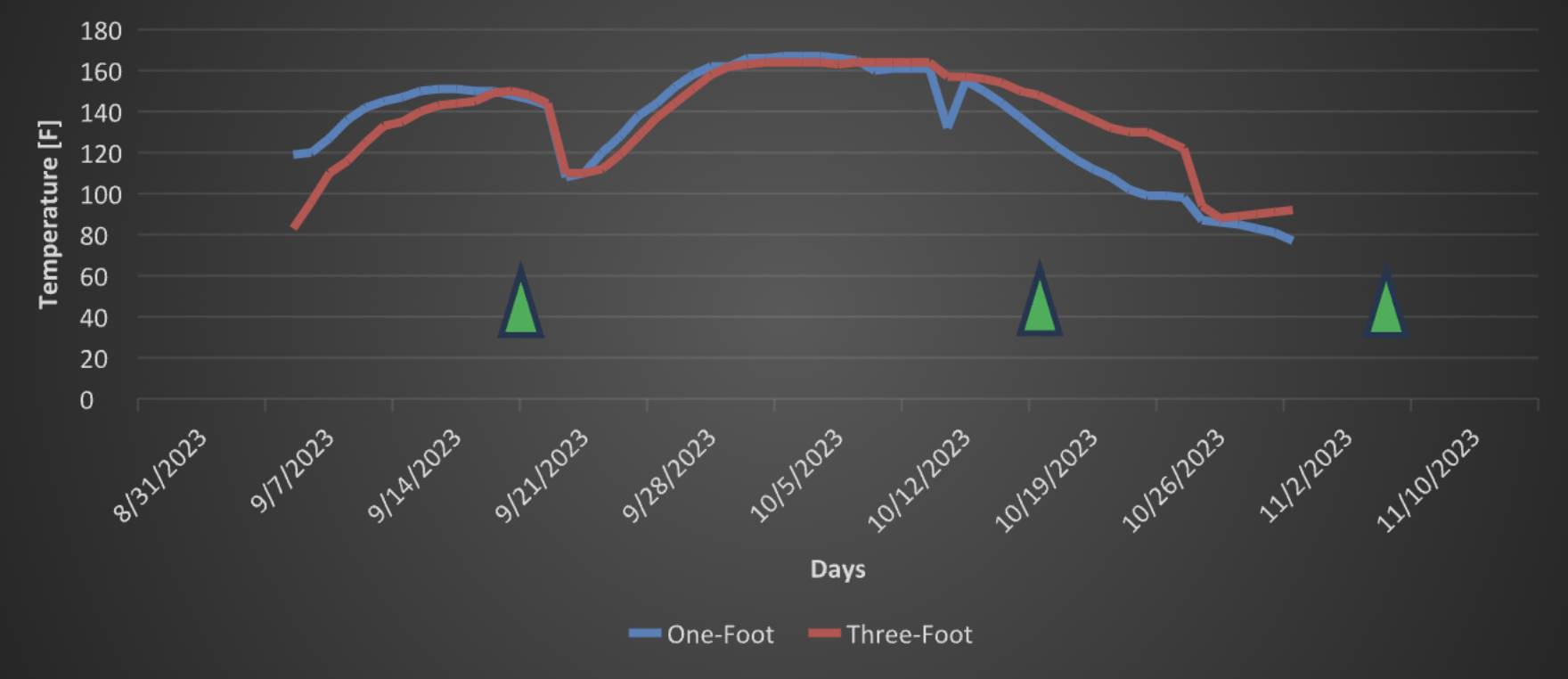
Click figure to enlarge.
Figure 2: Bin #2 Temperatures
Daily temperatures of the composting bins recorded during the 3-month study. Note “green” triangles denote pile turning events.

Click image to enlarge.
Tissue Degradation: Most of the beef products and greater than 60% of the deer soft tissue was degraded by the first turn at three weeks. Following each subsequent turn, less tissue remained visible until the final turn where only clean bone remained.
Images below show a time series images of soft tissue and bones taken throughout 2023 compost trials.
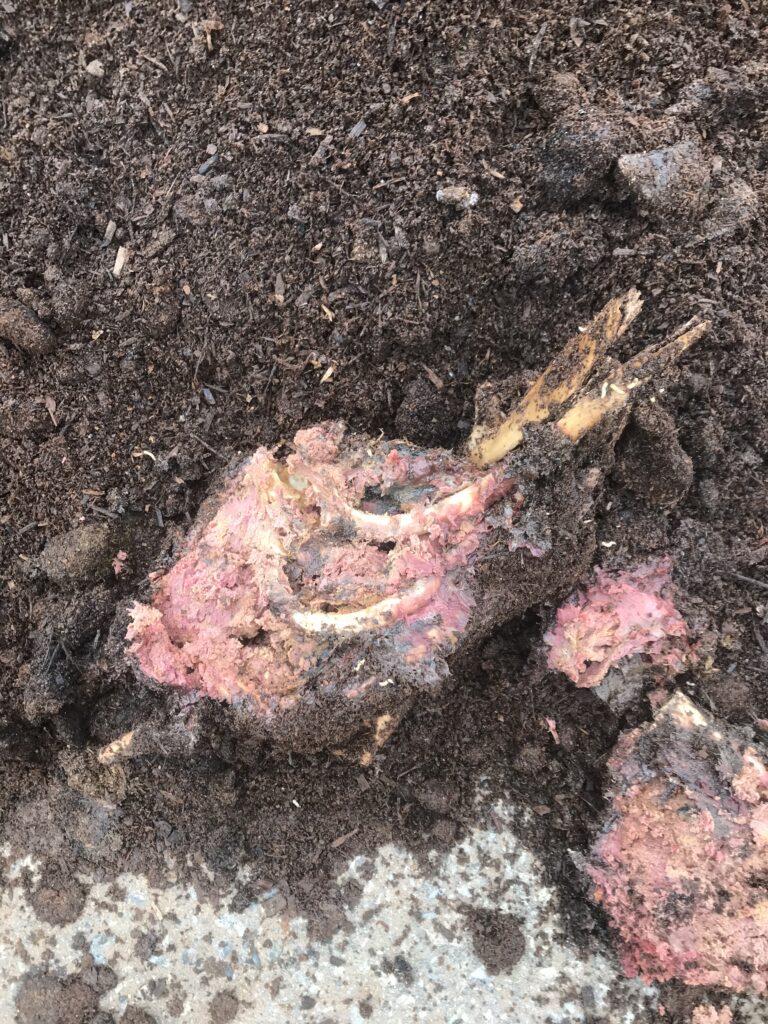
Soft tissue remaining at the week three turning event.
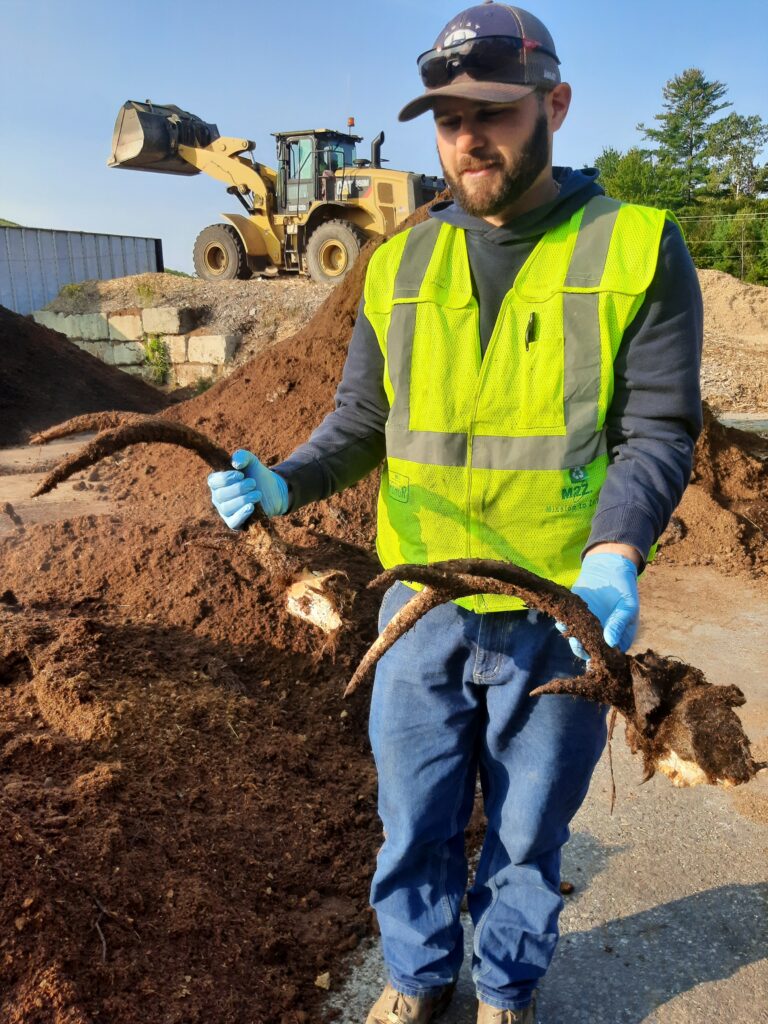
Clean bone remnants at end of study.
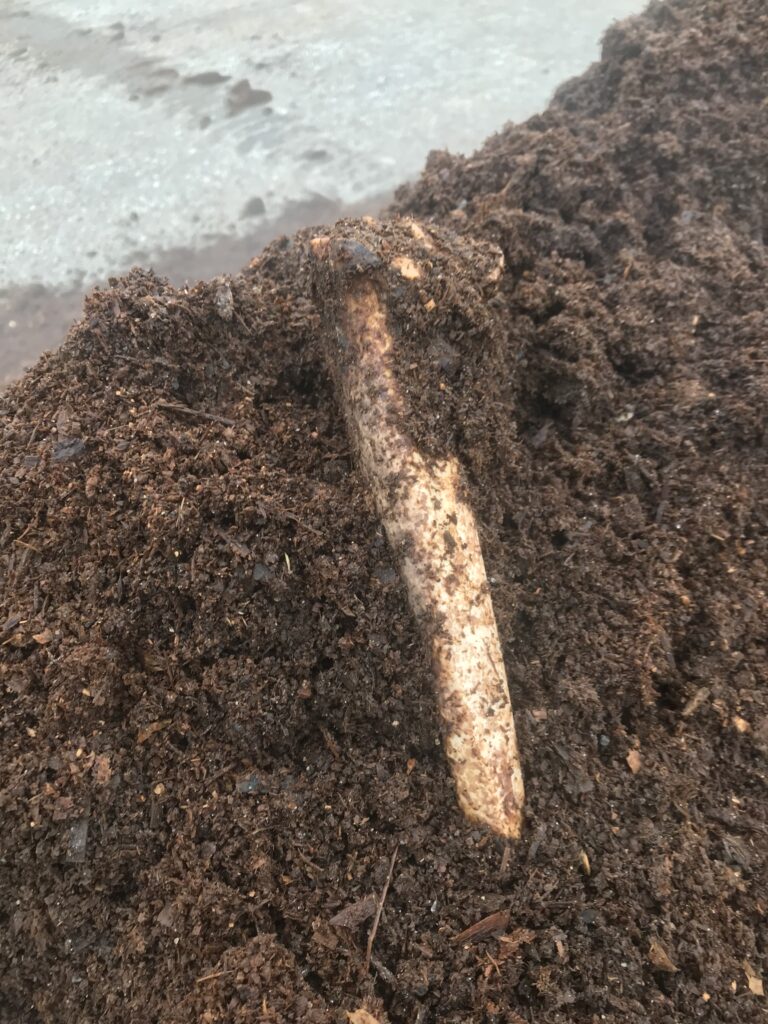
Clean bone remnants at end of study (cont.).
Odors, Leachate and Vectors: Leachate collection was scheduled to align with compost sampling. Despite a total cumulative 8.096 inches precipitation recorded during the composting period, no leachate was collected from either composting bin during the entire study (Figure 3). The composting system retained water within its porous matrix despite the beef and deer having a water content of approximately 75%. The adsorptive nature of the bedded horse manure was sufficient to capture all leachate liberated during the compost process.
Figure 3: Precipitation events recorded during the 2023 compost trials.
Data from weather station located at Waterville, Maine Airport. Red arrows denote leachate sampling events

Click image to enlarge.
Odors were not a significant issue during the study period as the generous cover material was able to suppress any odor emissions.
Conclusions
The collective results of these trials demonstrate that passive aeration can work well in a container system provided that the base has optimal porosity. Additionally, composting in this manner offers several valuable advantages when managing diseased or contaminated mortalities, including the ability to tie up nutrients in a secure, watertight vessel, reduce leachate generation, reduce odors and possible vector attraction and, ultimately, make putrescible materials less bulky and easier to handle/manage. Finally, in places where Chronic Wasting Disease is prevalent, this methodology offers an alternative, safe, secure way to treat carcasses and prevent contamination of surrounding areas.
Acknowledgements
Funding for this research was made possible through the generous support of the U.S. Department of Agriculture, Natural Resources Conservation Service (NRCS), the Maine Department of Agriculture, Conservation and Forestry’s (DACF) and the Maine Department of Environmental Protection’s (DEP) Division of Materials Management.
Mark A. King, Maine Department of Environmental Protection (Augusta, Maine); Mark F. Hedrich, Maine Department of Agriculture, Conservation and Forestry (Augusta, Maine); Linda S. Lee, Department of Agronomy, School of Sustainability Engineering and Environmental, Interdisciplinary Ecological Science & Engineering (ESE) Graduate Program, Purdue University (West LaFayette, Indiana); and Youn Jeong Choi, Purdue University (West LaFayette, Indiana).
References
Carr, L. E. 2004. Composting: A treatment alternative for dairy cattle mortalities. Maryland Dairy Talk. 7 (1): 2 p.
Coker, C. 2024, July. Lower Tech Containerized Composting. BioCycle CONNECT.
King, M.A., B. Seekins and M. Hutchinson. 2005. Observations of Static Pile Composting of Large Animal Carcasses Using Different Media. Proceedings: Symposium on Composting Mortalities and Slaughterhouse Residuals, May 24 & 25, 2005 South Portland, Maine. 7 p.
Miller, Lori P, A. Buckendahl, G.A. Flory, R.W. Peer, M.L. Hutchinson, M.A. King, J.B. Payne, E. Malek, J. Bonhotal, K. Powell, D. Ross and T. Le. 2017. Composting Livestock 2017, Livestock mortality composting protocol. USDA APHIS: 34 p.