
Top: 2024 Cultivating Community Composting Forum. Photos and Figures courtesy of ILSR
Community composting continues to become a more established and resilient part of the organics recycling ecosystem. The 2026 Community Composter Mini-Census – based on 2024 data – from the Institute for Local Self-Reliance (ILSR) offers a data-rich update on how the sector is evolving since the first national census in 2022. For composters, the findings provide both validation and insight into how peer operations are growing, diversifying revenue, and managing scale.
The Census is in the Appendix of a larger report, Keep Compost Local: A Roadmap for Local Governments to Build Community Prosperity with Composting, that offers guidance for municipalities and counties to support and partner with local composting initiatives to meet key community priorities while bringing myriad economic and cross-sectoral benefits. The report, which BioCycle will write about in an upcoming article, draws largely on research from 17 case studies of model local composting programs from across the country, 15 of which feature public-private partnerships between local governments and local composters.
Growth Is No Longer the Exception
One of the clearest signals from the latest Census is that community composting is expanding in both number and scale. While the sector once averaged just one new operation per year prior to 2010, the Census shows an average of 11 new operations per year between 2011 and 2025, confirming that community composting has entered a sustained expansion phase.
Figure 1. Growth of Community Composting Operations in the U.S., by Start Year

Food Scraps Are Central to the Model
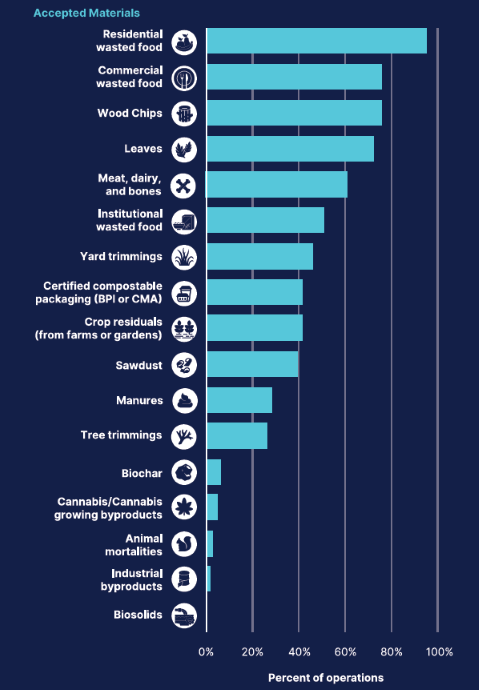
Nearly all community composters surveyed – 98% – report handling food scraps. Of those accepting wasted food, 61% accept meat, dairy, and bones, compared to an estimated 57% of U.S. composting facilities that only handle yard trimmings. This highlights a key distinction: community composters are often filling gaps in local food waste diversion that larger systems are not designed to address.
Figure 2. Materials Accepted by Community Composting Operations
Seventy-six percent of surveyed composters report that they are actively scaling up their operations. Among repeat respondents, the total volume of organic material handled increased by 17% from 2023 to 2024, underscoring that growth is not just coming from new entrants, but from existing programs increasing throughput. In 2024 alone, Census respondents diverted 69,697,344 pounds (almost 35,000 tons) of food scraps from disposal. That figure illustrates the cumulative impact of small, distributed operations that operate close to where waste is generated.
Scaling Brings Capital Needs Into Focus
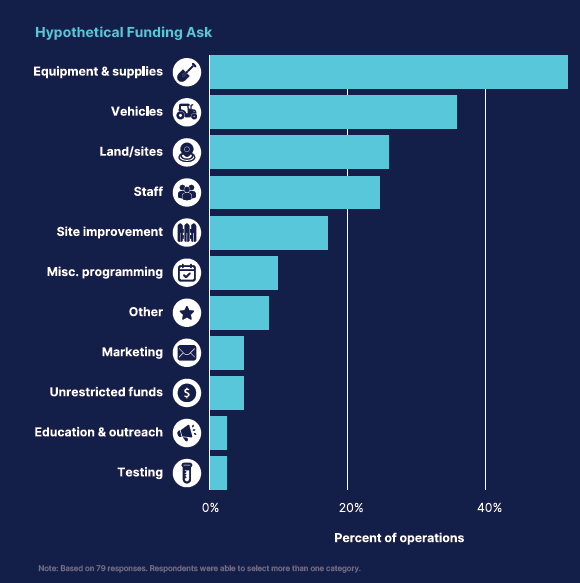
As operations grow, so do investment needs. When asked about hypothetical funding priorities, respondents most frequently cited equipment and supplies, followed by vehicles, land or sites, staffing, and site improvements.
These needs reflect the realities of scaling community-based infrastructure, where capital investments are often incremental but critical to maintaining service quality, managing contamination, and supporting staff.
Figure 3. Community Composting Operations’ Top Hypothetical Funding Needs
Revenue Mix Is Shifting, Not Weakening
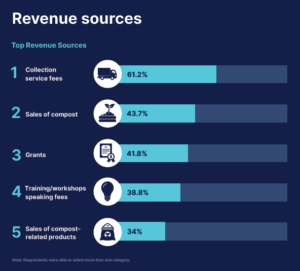
The Census data shows notable changes in how community composters are funded. While the share of respondents receiving collection service fees declined from 75% in 2022 to 61.2% in 2024, reliance on government contracts more than doubled, rising from 11.9% to 26.2% over the same period. Grant funding also increased significantly, with 41.8% of respondents receiving grants in 2024, up from 26.2% in 2022.
Figure 4. Primary Revenue Sources for Community Composting Operations
Importantly, these shifts do not signal weakening business fundamentals. The majority of respondents estimated that 85% or more of their revenue came from earned income in both 2023 and 2024, indicating that grants and contracts are supplementing, not replacing, core business activity.
Financial Health Is Improving
Financial stability is trending in a positive direction. The share of respondents reporting positive revenue increased from 2023 to 2024, with 71% reporting positive revenue in 2024, a 14 percentage point increase year over year.
This improvement suggests that many community composters are moving beyond startup volatility and toward more sustainable operating models.
Jobs and Community Impact Remain Core Strengths
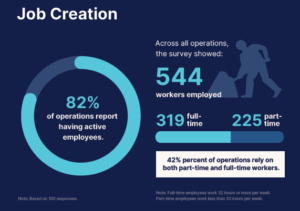
Community composting continues to generate local employment. Across all respondents, 544 workers were employed, including 319 full-time and 225 part-time positions. Eighty-two percent of operations reported having active employees, with many relying on a mix of full- and part-time staff.
Figure 5. Employment and Workforce Composition in Community Composting Operations
Because composting remains local by design, these jobs, and the benefits of compost use stay within the communities being served.
What the Data Signals for Composters
Taken together, the Census paints a picture of a sector that is scaling thoughtfully, diversifying revenue, and delivering measurable diversion while remaining grounded in local service. For composters, the data offers reassurance that the challenges of growth are widely shared – and that peers across the country are finding ways to build viable, impactful operations.
As community composting continues to mature, the Census reinforces what many operators already know: this sector is no longer emerging. It is establishing itself as a durable, essential component of modern organics management systems.