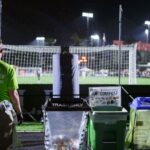
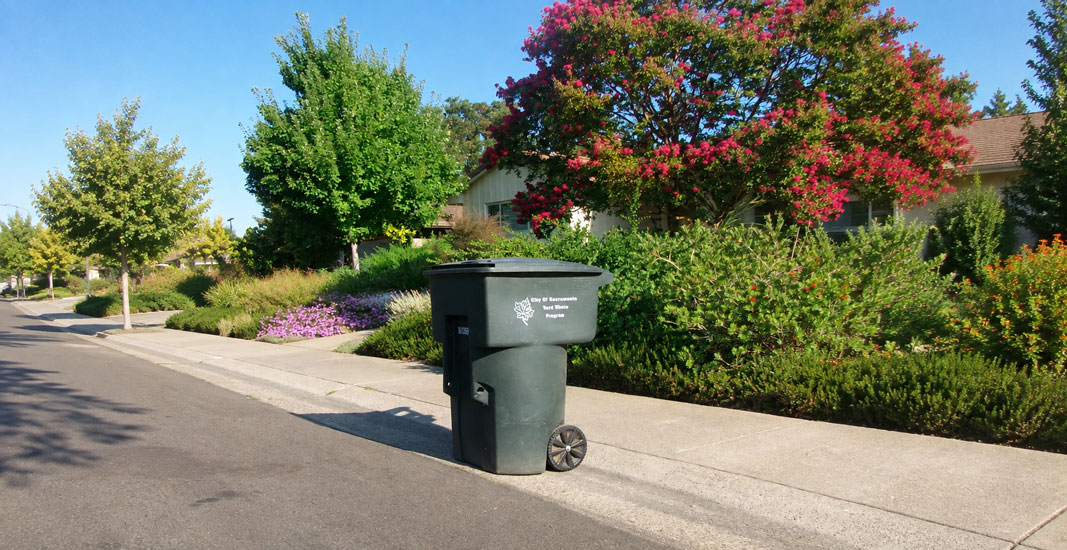
Top Photo: Photo courtesy of Sacramento Recycle
By Juliana Beecher
The City of Sacramento, California provides trash, recycling and organics curbside collection for residents in single-family homes, duplexes, triplexes, fourplexes, mixed use properties, and some larger multifamily buildings. (Commercial collection is private.) In July and August 2026, Sacramento conducted state-mandated route reviews for the second year, flipping lids on curbside organics bins to observe their contents. Approximately 8% of the almost 6,000 bins inspected contained food scraps. Sacramento collected over 79,000 tons of green waste and food waste in fiscal year 2025/2026. Food waste collection is still fairly new for the City — this is the first year that the mandated route review included food waste.
City staff have been working to increase participation in the residential food waste collection program. Education and awareness materials adorn the backs of buses and the sides of collection trucks; video public service announcements air in Department of Motor Vehicle waiting rooms; residents receive mailers such as an annual service guide and tips for recycling. There are brochures to hand out at events and ads in local magazines. The City has given away over 40,000 kitchen caddies for collecting food scraps.
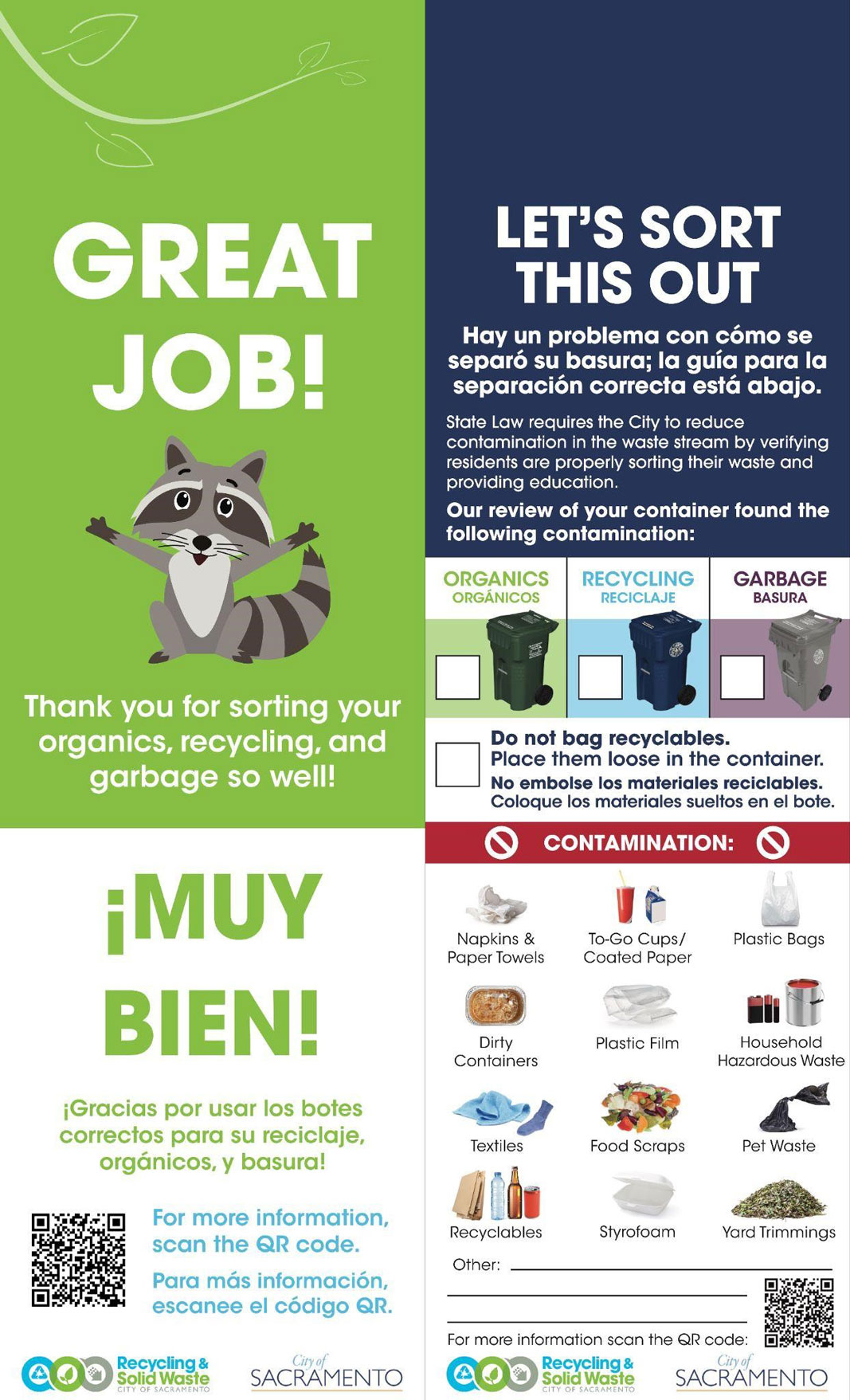
Images courtesy of City of Sacramento. Click here to expand this image.
One component of Sacramento’s organics recycling education campaign is tagging collection bins to let residents know how they’re doing with sorting and contamination. All waste and recycling collection vehicles have hopper cameras, but they don’t record and are only used for drivers to see if a bin has been fully emptied, not to flag contamination. Identifying contamination requires lid-flipping. “Great job!” tags go on bins with no contamination (e.g. organics with no trash, recycling with no food scraps). “Let’s Sort This Out” tags go on bins with contamination. Both tags are accompanied by the “What Goes Where?” flier to remind residents how to sort. All tags include feedback and tips in English and Spanish. According to a city spokesperson, in this year’s route review about 35% of the bins checked received a “Let’s Sort This Out” tag.

Image courtesy of City of Sacramento.
Across California, local jurisdictions are working to move the needle on food waste collection to meet the goals of SB 1383. According to CalRecycle, 97% of jurisdictions with requirements have implemented organics recycling programs since 2022 when the law went into effect. Organics disposal was already inching down before 2022 — from 21 million tons in 2018 to 19 million tons in 2021 — and 2025 landfill data is anticipated later this year.