Top Photo Credit: Doug Pinkerton for BioCycle
Caroline Barry
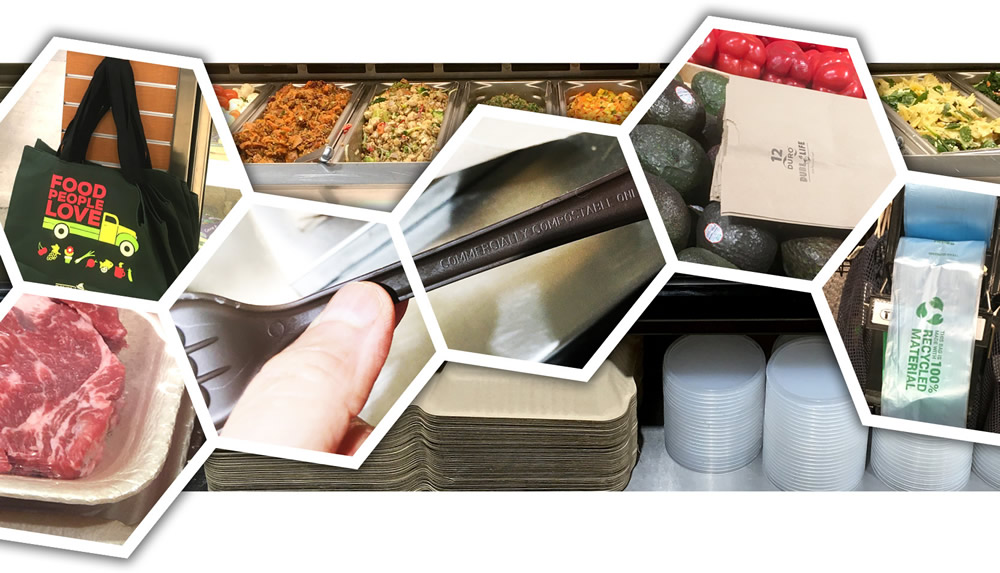
Five years ago, conversations about compostable packaging were defined by the promise of material innovation. If food-contact packaging was designed to break down in industrial compost systems, then both the packaging and the food scraps it carries could be recovered together, enabling composters to divert more organics from landfill while supporting a more circular economy.
As interest in these materials grew, so did a harder set of questions:
- Would composting facilities accept these materials?
- Could consumers identify and dispose of compostable packaging correctly?
- And could composters manage these materials without taking on added contamination and cost?
Those questions have shaped the evolution of the sector over the past five years and guided the work of the Closed Loop Partners’ Center for the Circular Economy’s Composting Consortium, which just released its impact report.
One of the Consortium’s most significant contributions has been its research on compostable packaging disintegration. Through the largest known singular field test of its kind in North America, the Consortium tested more than 23,000 certified compostable packaging units across 10 commercial composting facilities and six composting technologies, offering a clearer picture of how materials perform across different processing conditions, composting technologies and timeframes.
The findings reinforced a useful truth. The success of compostable packaging depends not only on material design and certification, but on the realities of composting methods and operating conditions. To help advance the field beyond individual studies, the Consortium donated anonymized data to the Compostable Field Testing Program (CFTP), contributing to an open-source dataset the sector can continue to build on.
Another major area of impact was the Composting Consortium Grant Program, led in partnership with the Biodegradable Products Institute (BPI) with support from the US Composting Council (USCC). In total, $200,000 in grant funding supported eight composter- and municipal-led projects across the U.S., helping facilities and communities improve infrastructure, integrate new approaches, and expand composting programs inclusive of compostable packaging.
Collectively, these projects expanded organics recycling access to nearly 240,000 U.S. households, giving more than half a million people access to food waste and compostable packaging collection. These efforts contributed a 9% increase in acceptance pathways for compostable packaging, based on BioCycle’s 2023 national food waste collection access and full-scale food waste composting infrastructure surveys.
The Consortium also undertook first-of-its-kind research into contamination – a persistent challenge facing composters. Across 10 composting sites, the research showed that conventional plastics remain the leading source of contamination and cost, accounting for 21% of operating expenses. Complementary research on labeling and design demonstrated that consumers are significantly more likely to correctly identify compostable packaging when it uses clear, consistent cues.
Over five years, the Consortium engaged more than 50 partners across the value chain, including composters who opened their facilities to testing, municipalities willing to pilot new approaches, and brands and material innovators who remained engaged through technical, operational, and policy complexities.
Industry organizations played an especially critical role. The USCC provided technical expertise, operational perspective, and strong alignment with composter realities, while BPI served as a key partner in translating shared research into practical guidance and funding pathways. Research partners, including RRS and CFTP, helped ensure rigorous analysis grounded in real world conditions.
Together, these partners did more than participate in research. They helped shape it. Their willingness to test assumptions, share data, and engage candidly ensured the Consortium’s findings reflected the operational realities that composters and municipalities face every day.
The U.S. composting industry has made meaningful progress over the last five years, but challenges remain. Contamination, uneven facility acceptance, and consumer confusion continue to constrain recovery. The Consortium’s work reinforces that compostable packaging is most effective as part of a broader organics recovery strategy – one grounded in clear design standards, aligned policies, education, and facility readiness.
Moving forward, the Closed Loop Center will build on the foundation of the Composting Consortium, as the initiative concludes, sharing practical insights through its knowledge hub, supporting implementation-focused research, and convening stakeholders to strengthen composting infrastructure nationwide. If there is one takeaway from the past five years, it is that progress in building a circular organics system depends on sustained collaboration, real world testing, and a shared commitment to improving outcomes over time.